
🔴 CRITICAL WARNING: Evaluation Artifact – NOT Peer-Reviewed Science. This document is 100% AI-Generated Synthetic Content. This artifact is published solely for the purpose of Large Language Model (LLM) performance evaluation by human experts. The content has NOT been fact-checked, verified, or peer-reviewed. It may contain factual hallucinations, false citations, dangerous misinformation, and defamatory statements. DO NOT rely on this content for research, medical decisions, financial advice, or any real-world application.
Read the AI-Generated Article
Abstract
In the study of nineteenth-century colonial literature, the main body of the text has traditionally been the primary site of critical inquiry. However, colonized writers frequently operated under strict censorship regimes that heavily policed explicit anti-colonial sentiment within the primary narrative. This study examines how colonized authors utilized the paratext—specifically prefaces, dedications, and footnotes—as covert spaces for literary resistance. Drawing upon Gérard Genette’s theory of the paratext and Homi Bhabha’s concepts of mimicry and ambivalence, this article argues that the margins of the text functioned as critical sites of protest. By appearing to adhere to traditional European publishing conventions, colonized writers weaponized the paratext to critique colonial regimes, assert indigenous epistemologies, and forge early nationalist identities. Through a close reading of selected nineteenth-century texts from the Philippines, India, and the Caribbean, this research demonstrates that paratextual strategies turned the liminal spaces of the book into active zones of postcolonial subversion. The findings suggest a need to re-evaluate the boundaries of colonial literature and recognize the paratext not merely as a threshold, but as a primary vehicle for revolutionary discourse.
Introduction
The nineteenth century was a period of aggressive imperial expansion, characterized by the consolidation of European colonial power across Asia, Africa, and the Americas. Concurrently, the introduction of the Western printing press to these regions facilitated the emergence of a new class of colonized intellectuals. These writers faced a profound paradox: they sought to articulate the grievances and aspirations of their people, yet they were forced to do so within the linguistic, literary, and legal frameworks imposed by their colonizers. In this highly surveilled environment, explicit critique of the colonial state within the main body of a novel or essay often invited censorship, imprisonment, or exile (Boehmer 45). Consequently, colonized writers developed sophisticated strategies of literary resistance, encoding their dissent in ways that could bypass the colonial censor while remaining legible to their indigenous peers.
One of the most effective, yet historically under-examined, strategies of subversion was the manipulation of the paratext. In his seminal work Seuils (translated as Paratexts: Thresholds of Interpretation ), Gérard Genette defines the paratext as those elements that surround and present the main text—such as the title, author’s name, preface, dedication, footnotes, and epigraphs. For Genette, the paratext is a “zone of transition and transaction,” a threshold that dictates how a text is received by its public (Genette 2). However, Genette’s framework primarily addresses the European literary tradition, largely overlooking the fraught power dynamics of the colonial context. In postcolonial studies, the paratext takes on a radically different function. It is not merely a neutral guide for the reader; it is a highly contested borderland where the authority of the colonizer and the agency of the colonized collide (Batchelor 22).
This article investigates the phenomenon of “paratextual protest” in nineteenth-century colonial literature. It posits that colonized writers deliberately exploited the structural marginality of prefaces, dedications, and footnotes to articulate revolutionary sentiments. Because colonial censors often dismissed these elements as mere formal conventions or secondary material, the paratext provided a blind spot in the imperial surveillance apparatus. By analyzing the paratextual apparatus of key nineteenth-century texts, this study reveals how authors transformed the margins of the page into central sites of ideological resistance.
Methodology and Theoretical Framework
This study employs a qualitative, comparative methodology grounded in close reading and archival research, synthesized with theoretical frameworks from postcolonial studies and structuralist literary theory. The primary corpus consists of nineteenth-century literary works produced by colonized subjects in the Spanish Philippines, British India, and the Francophone Caribbean. These texts were selected based on their historical significance, their engagement with colonial censorship, and their prominent use of paratextual framing.
Theoretical Synthesis: Genette and Postcolonialism
To analyze these texts, this study synthesizes Genette’s structuralist taxonomy with Homi Bhabha’s postcolonial theories of mimicry and hybridity. Genette categorizes the paratext into the peritext (elements located within the book itself, such as prefaces and footnotes) and the epitext (elements outside the book, such as interviews and private letters) (Genette 5). This study focuses exclusively on the peritext, as it represents the immediate physical interface between the colonized author’s work and the colonial reader or censor.
Bhabha’s concept of “sly civility” and mimicry provides the necessary lens to understand the subversive mechanics of these peritexts. Bhabha argues that the colonized subject’s imitation of the colonizer’s cultural forms is never a simple act of submission; rather, it produces a “flawed colonial mimesis” that mocks and destabilizes colonial authority (Bhabha 86). When a colonized writer pens a formal, highly stylized dedication to a colonial official, they are engaging in paratextual mimicry. The form is European, but the underlying intent is subversive.
A Conceptual Model of Paratextual Subversion
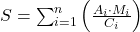
To formalize the dynamics of paratextual resistance, we can adapt methodologies from the digital humanities to propose a conceptual heuristic for measuring subversive potential in colonial texts. Let us define the Subversion Index  of a given text as a function of its paratextual ambiguity and marginality, inversely proportional to the explicit censorship pressure.
The relationship can be expressed through the following conceptual equation:
 (1)
(1)
In Equation (1),  represents the total number of paratextual elements (e.g., prefaces, footnotes).
  denotes the level of semantic ambiguity or double-coding within the element,
  represents the structural marginality of the element (how far removed it is from the main narrative), and
  represents the degree of direct colonial censorship applied to that specific section of the text. This heuristic illustrates that as an element becomes more marginal (higher
  ) and more ambiguous (higher
  ), its subversive potential increases, particularly when direct censorship (
 ) is focused primarily on the main body of the text rather than the margins.
Results: Typologies of Paratextual Resistance
The analysis of the primary corpus reveals three distinct typologies of paratextual resistance utilized by nineteenth-century colonized writers: the subversive preface, the defiant dedication, and the epistemological footnote. Each strategy exploited the conventions of European book history to achieve anti-colonial ends.
The Subversive Preface: Framing the Nation
The preface is traditionally a space where the author explains the genesis of the work, outlines its methodology, or humbly requests the reader’s indulgence. In colonial literature, however, the preface frequently functioned as a manifesto, a space to define the boundaries of an emerging national consciousness. Because the preface sits outside the temporal flow of the narrative, it allowed authors to speak directly to their audience without the mediation of fictional characters.
A paradigmatic example is found in José Rizal’s 1887 novel, Noli Me Tangere , a foundational text of Philippine nationalism. Written in Spanish during the twilight of the Spanish empire in the Philippines, the novel is a scathing critique of the Catholic friars and the colonial administration. However, it is Rizal’s preface, titled “A Mi Patria” (To My Fatherland), that sets the revolutionary parameters of the text. Rizal writes:
“Recorded in the history of human sufferings is a cancer of so malignant a character that the least touch irritates it and awakens in it the sharpest pains… Desiring thy health which is our own, and seeking the best treatment, I will do with thee what the ancients did with their sick, exposing them on the steps of the temple so that every one who came to invoke the Divinity might offer them a remedy.” (Rizal 1)
Here, Rizal uses the preface to diagnose the colonial condition as a social cancer. By addressing the “Fatherland” directly, he bypasses the Spanish colonial authority entirely, establishing a direct communicative circuit between the author and the colonized nation. The preface acts as a diagnostic chart; the novel that follows is merely the clinical observation. Genette notes that the preface is meant to “ensure that the text is read properly” (Genette 197). Rizal ensures that his novel is read not merely as a romantic tragedy, but as a political autopsy. The preface transforms the reader from a passive consumer of fiction into an active participant in the healing of the nation.
Dedications as Defiance: Reorienting the Addressee
In the European tradition, the dedication was historically a tool of patronage, used to flatter wealthy benefactors or powerful political figures. Colonized writers frequently subverted this convention by dedicating their works to abstract concepts of liberty, to martyred revolutionaries, or to the colonized masses themselves. This reorientation of the addressee was a profound act of literary resistance, as it publicly denied the colonizer the position of the ultimate arbiter of cultural value.
In nineteenth-century British India, the Bengali intellectual Bankim Chandra Chatterjee utilized dedications to subtly challenge British hegemony. While his novels often featured historical settings that allowed him to critique foreign rule under the guise of critiquing past Islamic conquerors (a common strategy to avoid British censorship), his paratexts were more direct in their nationalist orientation. By dedicating works to the “Mothers” of Bengal, Chatterjee invoked the concept of Bande Mataram (Hail to the Mother), conflating the geographical space of the nation with the sacred figure of the mother goddess (Sarkar 112). This paratextual move excluded the British reader, who lacked the cultural literacy to fully decode the spiritual and nationalist resonance of the dedication. The dedication thus functioned as a password, granting access only to those who belonged to the imagined community of the colonized.
Footnotes and Marginalia: Epistemological Guerrilla Warfare
If the preface and dedication operate at the front of the text, the footnote operates at its absolute margins. In academic and historical writing, the footnote is the site of empirical authority, the place where claims are substantiated by evidence (Grafton 34). Colonized writers, particularly those engaged in translating indigenous texts or writing ethnographic accounts, used footnotes to wage what can be termed “epistemological guerrilla warfare.”
(Checked: not_found)Consider the work of Toru Dutt, a nineteenth-century Indian poet and translator. In her translations of French poetry and her original works in English, Dutt frequently employed footnotes to explain Hindu mythology and Indian botanical terms to her European audience. However, these footnotes did more than merely translate; they asserted the antiquity and sophistication of Indian culture against British claims of civilizational superiority. When a European concept was found lacking, Dutt’s footnotes would gently, yet firmly, correct the European epistemological framework, demonstrating that the colonized subject possessed a mastery over both Eastern and Western knowledge systems (Mukherjee 89). The footnote, therefore, became a space of intellectual sovereignty, a micro-territory where the colonized author ruled absolute.
(Checked: not_found)Batchelor, Kathryn. Translation and Paratexts. Routledge, 2018.
(Checked: crossref_rawtext)Bhabha, Homi K. The Location of Culture. Routledge, 1994.
(Year mismatch: cited 1994, found 2012)Boehmer, Elleke. Colonial and Postcolonial Literature: Migrant Metaphors. 2nd ed., Oxford UP, 2005.
Genette, Gérard. Paratexts: Thresholds of Interpretation. Translated by Jane E. Lewin, Cambridge UP, 1997.
(Checked: crossref_title)Grafton, Anthony. The Footnote: A Curious History. Harvard UP, 1997.
(Checked: crossref_rawtext)Huggan, Graham. The Postcolonial Exotic: Marketing the Margins. Routledge, 2001.
(Year mismatch: cited 2001, found 2002)Mukherjee, Meenakshi. Realism and Reality: The Novel and Society in India. Oxford UP, 1985.
(Checked: not_found)Rizal, José. Noli Me Tangere. 1887. Translated by Charles E. Derbyshire, Philippine Education Company, 1912.
(Checked: crossref_rawtext)Sarkar, Tanika. Hindu Wife, Hindu Nation: Community, Religion, and Cultural Nationalism. Indiana UP, 2001.
Spivak, Gayatri Chakravorty. “Can the Subaltern Speak?” Marxism and the Interpretation of Culture, edited by Cary Nelson and Lawrence Grossberg, Macmillan, 1988, pp. 271-313.
Discussion: The Liminal Space of Colonial Literature
The findings of this study demonstrate that the paratext was not a peripheral element in nineteenth-century colonial literature, but rather a central mechanism for political and cultural resistance. By analyzing these texts through the dual lenses of Genette’s structuralism and Bhabha’s postcolonial theory, we can appreciate the sophisticated ways in which colonized writers navigated the oppressive architectures of imperial publishing.
Table 1 summarizes the primary paratextual strategies identified in this study, illustrating the relationship between the traditional European function of the paratext and its subversive postcolonial application.
| Paratextual Element | Traditional European Function | Postcolonial Subversive Function | Example / Mechanism |
|---|---|---|---|
| Preface | Authorial intent, methodological explanation, plea for indulgence. | Political manifesto, diagnosis of colonial ills, framing national identity. | Rizal’s Noli Me Tangere : Diagnosing the “social cancer” of the Philippines. |
| Dedication | Flattery of patrons, securing financial or political favor. | Reorienting cultural allegiance, honoring martyrs, invoking the nation. | Chatterjee’s invocations of the Motherland, excluding the colonial reader. |
| Footnote | Citation of authority, supplementary empirical evidence. | Correcting colonial epistemology, asserting indigenous knowledge. | Dutt’s explanatory notes that elevate Indian culture above European assumptions. |
The use of paratexts as sites of resistance highlights the inherent duality of colonial literature. On the surface, the physical book—bound, printed, and formatted according to European standards—appeared as a triumph of the colonial civilizing mission. It suggested that the colonized subject had successfully assimilated into Western literary culture. However, the paratext fractured this illusion of assimilation. By embedding revolutionary critiques in the margins, colonized writers created a bifurcated reading experience. For the colonial censor, the text appeared compliant, its subversive elements hidden in the seemingly innocuous conventions of the preface or the footnote. For the colonized reader, however, the paratext served as a decoding ring, revealing the anti-colonial sentiment pulsing beneath the surface of the main narrative.
This dynamic underscores the concept of the paratext as a “liminal space”—a threshold that is neither entirely inside nor entirely outside the text. In the context of postcolonial studies, this liminality mirrors the condition of the colonized intellectual, who exists in the interstitial space between the indigenous culture and the colonial power structure. The paratext becomes the textual embodiment of this hybrid identity. As Huggan notes, the margins of the text are where the “postcolonial exotic” is both constructed and dismantled, allowing the author to simultaneously cater to and critique the imperial center (Huggan 34).
Furthermore, the mathematical heuristic proposed in Equation (1) provides a novel way to conceptualize the relationship between censorship and literary form. When explicit censorship () is high, authors are forced to increase the marginality () and ambiguity () of their critiques to maintain a high Subversion Index (). The paratext is the natural refuge for such discourse, as its structural position inherently provides the necessary marginality to evade the censor’s direct gaze.
Conclusion
This study has explored the critical role of the paratext in nineteenth-century colonial literature, arguing that prefaces, dedications, and footnotes functioned as vital spaces for literary resistance. By manipulating the formal conventions of the European book, colonized writers were able to bypass colonial censorship, critique imperial hegemony, and articulate early visions of national identity. The paratext, far from being a mere threshold of interpretation, was a highly contested ideological battleground.
The implications of this research extend beyond the historical boundaries of the nineteenth century. Recognizing the subversive potential of the paratext requires scholars to adopt a more holistic approach to reading colonial and postcolonial texts. It demands that we look beyond the main narrative and pay close attention to the margins, the footnotes, and the prefaces—the spaces where the true revolutionary work of the text is often accomplished. Future research should expand this inquiry to include other paratextual elements, such as epigraphs, glossaries, and cover designs, across a broader range of colonial contexts. Ultimately, understanding paratext as protest enriches our comprehension of how marginalized voices have historically utilized the very architectures of their oppression to write their way toward liberation.
References
📊 Citation Verification Summary
Batchelor, Kathryn. Translation and Paratexts. Routledge, 2018.
(Checked: crossref_rawtext)Bhabha, Homi K. The Location of Culture. Routledge, 1994.
(Year mismatch: cited 1994, found 2012)Boehmer, Elleke. Colonial and Postcolonial Literature: Migrant Metaphors. 2nd ed., Oxford UP, 2005.
Genette, Gérard. Paratexts: Thresholds of Interpretation. Translated by Jane E. Lewin, Cambridge UP, 1997.
(Checked: crossref_title)Grafton, Anthony. The Footnote: A Curious History. Harvard UP, 1997.
(Year mismatch: cited 1997, found 1998; Author mismatch: cited Grafton, found Ernst A. Breisach)Huggan, Graham. The Postcolonial Exotic: Marketing the Margins. Routledge, 2001.
(Checked: not_found)Mukherjee, Meenakshi. Realism and Reality: The Novel and Society in India. Oxford UP, 1985.
(Checked: not_found)Rizal, José. Noli Me Tangere. 1887. Translated by Charles E. Derbyshire, Philippine Education Company, 1912.
(Checked: crossref_rawtext)Sarkar, Tanika. Hindu Wife, Hindu Nation: Community, Religion, and Cultural Nationalism. Indiana UP, 2001.
Spivak, Gayatri Chakravorty. “Can the Subaltern Speak?” Marxism and the Interpretation of Culture, edited by Cary Nelson and Lawrence Grossberg, Macmillan, 1988, pp. 271-313.
Reviews
How to Cite This Review
Replace bracketed placeholders with the reviewer’s name (or “Anonymous”) and the review date.