
🔴 CRITICAL WARNING: Evaluation Artifact – NOT Peer-Reviewed Science. This document is 100% AI-Generated Synthetic Content. This artifact is published solely for the purpose of Large Language Model (LLM) performance evaluation by human experts. The content has NOT been fact-checked, verified, or peer-reviewed. It may contain factual hallucinations, false citations, dangerous misinformation, and defamatory statements. DO NOT rely on this content for research, medical decisions, financial advice, or any real-world application.
Read the AI-Generated Article
Abstract
This article examines whether material strain limits, section rotation limits, or global displacement limits provide the most appropriate basis for the seismic design of pile-supported piers and wharves. The question is addressed from a performance-based perspective, emphasizing correlation with observed damage in past earthquakes and in laboratory testing. After reviewing the mechanics of pile-supported marine structures and the nature of seismic demands, the article synthesizes field observations from major earthquakes (e.g., 1989 Loma Prieta, 1995 Kobe, 2010–2011 Chile and Christchurch) and results from centrifuge, shake-table, and component tests. A comparative framework is proposed that distinguishes: (1) local material performance (strain-based), (2) structural mechanism performance (rotation/curvature-based), and (3) system and operational performance (displacement-based). The analysis shows that no single parameter is sufficient across all performance objectives. Instead, strain limits correlate best with onset of local damage and low-cycle fatigue; rotation (or curvature) limits correlate best with plastic hinge formation and residual deformation; and displacement limits correlate best with functionality, mooring and fender integrity, and geotechnical interaction. A hybrid, hierarchy-of-limits framework is proposed in which strain limits govern detailing and capacity design, rotation limits govern plastic mechanism control, and displacement limits govern service and operational performance. Practical recommendations are provided for integrating these limit states into seismic design procedures for pile-supported piers and wharves.
Introduction
Pile-supported piers and wharves are critical components of port and harbor infrastructure, enabling cargo handling, naval operations, and emergency response. Their seismic performance has direct economic and strategic implications, as demonstrated by damage in the 1989 Loma Prieta, 1994 Northridge, 1995 Kobe, 2010 Maule, and 2011 Christchurch earthquakes (Werner et al.; EERI; PIANC). These structures are typically characterized by a deck supported on a grid of vertical and batter piles, often founded in liquefiable or laterally spreading soils. Under strong ground shaking, they experience complex soil–pile–deck interaction, large inelastic demands, and significant permanent deformations.
Modern seismic design of pile-supported piers and wharves is increasingly performance-based, requiring explicit linkage between engineering demand parameters (EDPs) and damage or functionality. The central question addressed here is: for these structures, which EDP—material strain, section rotation, or global displacement—most appropriately describes seismic performance, in the sense of correlating with observed damage in the field and in the laboratory?
Traditional force-based design, using elastic analysis and strength reduction factors, has been largely supplanted by displacement-based or performance-based approaches in port engineering guidelines (e.g., ASCE/COPRI 61; PIANC; NZ Transport Agency). However, practice remains heterogeneous: some standards emphasize curvature or strain limits at pile plastic hinges; others specify allowable deck displacements or pile-head rotations; and still others rely on global drift or displacement spectra. This diversity reflects both the multi-scale nature of damage (from rebar buckling to berth misalignment) and the incomplete consensus on the most reliable and practical EDPs for marine structures.
This article critically evaluates strain, rotation, and displacement limits as design parameters for the seismic performance of pile-supported piers and wharves. The focus is on:
- Mechanistic interpretation: how each parameter relates to physical damage mechanisms.
- Empirical correlation: how well each parameter correlates with observed damage in earthquakes and experiments.
- Practicality: how readily each parameter can be predicted, checked, and implemented in design workflows.
On this basis, a hybrid framework is proposed that assigns each parameter a specific role within a coherent performance-based seismic design methodology.
Background and Conceptual Framework
Structural System and Seismic Demand Characteristics
Pile-supported piers and wharves typically consist of:
- A reinforced concrete or steel deck (often with pile caps or bent caps).
- A grid of vertical and occasionally batter piles (steel pipe, precast concrete, or cast-in-place concrete), sometimes with pile bents.
- Soil or rock foundation, frequently including soft or liquefiable layers and sloping seabeds.
- Ancillary systems: fenders, mooring hardware, cranes, pipelines, and utilities.
Seismic demands arise from:
- Inertial forces from deck and superimposed masses.
- Kinematic interaction from soil deformations, including liquefaction-induced lateral spreading and downdrag.
- Hydrodynamic effects and wave/current interaction (typically secondary for structural damage, but relevant for operational performance).
Damage is often concentrated in:
- Plastic hinges at pile heads (pile–deck interface) and, in some cases, at mid-depth where soil stiffness changes.
- Connections between piles and caps or decks (shear keys, dowels, welds).
- Soil–pile interface zones in laterally spreading ground.
- Deck joints, fender systems, and mooring hardware due to large relative displacements.
Engineering Demand Parameters
For seismic design, three broad classes of EDPs are commonly considered:
Material Strains
Material strains include:
- Reinforcing steel tensile and compressive strains
 .
. - Concrete compressive strains
 .
. - Local strains in steel piles (shell strains, weld strains).
These are local quantities, directly related to material constitutive behavior and damage such as yielding, cracking, spalling, buckling, and fracture. Strain-based limits are often expressed as allowable tensile/compressive strains at critical sections for different performance levels (e.g., Immediate Occupancy, Damage Control, Collapse Prevention).
Section Rotations and Curvatures
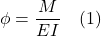
Section rotation  and curvature
  are kinematic measures at the member or section level. For a beam-column element, curvature is related to bending moment
  and flexural rigidity
  by:
by:
Section rotation is the integral of curvature over a plastic hinge length  :
:

where  is the plastic component of curvature. Rotation limits are often used to control plastic hinge demands and to prevent excessive residual deformations or low-cycle fatigue.
Global Displacements
Global displacements include:
- Deck displacements at the fender line or mooring points (horizontal and vertical).
- Pile-head displacements and drifts.
- Relative displacements between structural and geotechnical elements (e.g., pile vs. ground).
These quantities are directly linked to serviceability, operability, and interaction with ships, cranes, and utilities. Displacement-based design procedures (e.g., Priestley et al.) use target displacements as primary design parameters.
Performance Objectives for Marine Structures
Port and harbor guidelines typically define multiple performance levels, such as (ASCE/COPRI 61; PIANC):
- Service-Level Earthquake (SLE): Minor damage, essentially elastic response, full operational capacity.
- Design-Level Earthquake (DLE) or Contingency-Level Earthquake (CLE): Controlled damage, limited inelastic action, rapid restoration of operations.
- Maximum Considered Earthquake (MCE): Significant damage allowed, but collapse prevention and life safety must be ensured.
Each performance level implies different acceptable ranges of strain, rotation, and displacement. The central design question is which parameter should be used as the primary control for each level and how these parameters should be combined.
Design/Method: Comparative Evaluation Framework
Evaluation Criteria
To assess the appropriateness of strain, rotation, or displacement limits, three criteria are adopted:
- Damage Correlation: The degree to which the parameter correlates with observed physical damage in field and laboratory settings.
- Predictability and Robustness: The reliability with which the parameter can be estimated in analysis, considering modeling uncertainties and soil–structure interaction.
- Practical Implementability: The ease with which the parameter can be incorporated into design checks, detailing rules, and performance verification.
Data Sources and Evidence Base
The evaluation draws on three main sources:
- Post-earthquake reconnaissance of port and harbor facilities (e.g., Loma Prieta, Kobe, Chile 2010, Christchurch 2011), as documented by EERI, PEER, and PIANC reports (Werner et al.; EERI; Cubrinovski et al.).
- Laboratory testing of piles, pile groups, and wharf systems, including:
- Centrifuge tests of pile-supported wharves in liquefiable soils (e.g., Boulanger et al.; Abdoun et al.).
- Shake-table tests of pile–deck systems (e.g., Kutter et al.; McKenna et al.).
- Component tests of reinforced concrete and steel piles under cyclic lateral loading (e.g., Priestley et al.; Kowalsky; Lehman et al.).
- Analytical and numerical studies that relate EDPs to damage indices and performance (e.g., displacement-based design frameworks by Priestley; performance-based port design by ASCE/COPRI 61; NZTA guidelines).
Analytical Linkages between Parameters
To compare parameters, it is useful to express their relationships. For a cantilever pile with height  and a plastic hinge at the pile head, the lateral displacement
  at the deck can be decomposed into elastic and plastic components:

Assuming a plastic hinge of length at the pile head and uniform plastic curvature within the hinge, the plastic rotation  and plastic displacement
  can be approximated as:


Curvature is related to extreme fiber strain  and section depth
  (distance from neutral axis to extreme fiber) by:

Combining (4)–(6), the plastic displacement can be related to material strain:
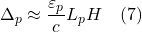
Equations (3)–(7) show that strain, rotation, and displacement are kinematically linked, but the relationships depend on geometry (, , ) and on the distribution of curvature. In real pile-supported wharves, additional complexities arise from soil–pile interaction, multiple hinges, and non-prismatic members. Nonetheless, these relationships provide a basis for translating limits between parameters and for understanding where each parameter is most directly connected to damage.
Implementation: Parameter-Specific Design Approaches
Strain-Based Design and Assessment
In strain-based approaches, the designer explicitly checks material strains at critical sections (e.g., pile heads, mid-depth hinges) against allowable limits for each performance level. Typical steps include:
- Model piles with fiber or layered-section elements to capture nonlinear material behavior.
- Perform nonlinear static (pushover) or dynamic analyses to obtain strain histories at critical sections.
- Compare peak and cumulative strains to limit values (e.g.,
 for Damage Control,
  for Collapse Prevention, depending on confinement and detailing).
Strain limits are often derived from component tests of reinforced concrete columns and piles (Priestley et al.; Kowalsky). For example, well-confined RC sections may sustain tensile steel strains of 4–6% and concrete compressive strains of 0.004–0.01 at ultimate, whereas poorly confined sections may fail at much lower strains.
Rotation- or Curvature-Based Design
Rotation-based design focuses on controlling plastic hinge rotations or curvatures. Implementation typically involves:
- Defining plastic hinge regions at pile heads and other potential hinge locations.
- Using section analysis or empirical relationships to determine curvature capacities
 and corresponding rotation capacities
  for each performance level.
 - Ensuring that computed demands
 from nonlinear analysis satisfy
  for the target performance level.
Rotation limits are often expressed as chord rotations (e.g., 2–3% for Damage Control, 4–6% for Collapse Prevention for ductile RC columns) and are widely used in bridge and building codes (Caltrans; ACI; NZTA). For marine piles, these limits may be adjusted to account for corrosion, low axial load, and cyclic degradation.
Displacement-Based Design
Displacement-based design (DBD) uses target displacements as primary design parameters. For pile-supported wharves, a typical DBD procedure (adapted from Priestley et al. and ASCE/COPRI 61) includes:
- Select target deck displacements
 for each performance level, based on operational and geotechnical criteria (e.g., maximum allowable relative displacement at fenders, tolerable pile–soil gap, acceptable residual displacement).
 - Idealize the wharf as an equivalent single-degree-of-freedom (SDOF) or multi-degree-of-freedom (MDOF) system with effective stiffness and damping corresponding to the target displacement.
- Determine design seismic demand (e.g., spectral displacement
 ) consistent with .
 - Design pile sections and detailing so that the resulting plastic mechanisms can accommodate without exceeding strain or rotation capacities.
DBD naturally emphasizes global displacements but must be supplemented with local checks (strain/rotation) to ensure that the assumed ductility is achievable.
Results/Validation: Correlation with Observed Damage
Field Evidence from Major Earthquakes
Loma Prieta (1989) and Kobe (1995)
Post-earthquake reconnaissance of pile-supported piers and wharves in the 1989 Loma Prieta and 1995 Kobe earthquakes revealed (Werner et al.; EERI):
- Extensive damage to pile heads and pile–deck connections, including cracking, spalling, and bar buckling.
- Significant permanent lateral displacements of decks, often exceeding 0.5–1.0 m, particularly where lateral spreading occurred.
- Loss of functionality due to misalignment of decks, damage to fenders and mooring hardware, and utility failures.
Where detailed back-analyses were performed, plastic hinge rotations and curvatures at pile heads were found to correlate more directly with observed local damage than global deck displacements. However, operational disruption correlated more strongly with global displacements and residual offsets. Material strains were not directly measured in the field but inferred from observed cracking and spalling patterns, suggesting steel strains in the range of several percent in heavily damaged piles.
Chile (2010) and Christchurch (2011)
The 2010 Maule (Chile) and 2011 Christchurch (New Zealand) earthquakes provided extensive data on pile-supported wharves in liquefiable and laterally spreading soils (Cubrinovski et al.; PIANC). Key observations include:
- Large lateral spreading-induced displacements (often 1–3 m) imposed on pile-supported wharves.
- Formation of plastic hinges not only at pile heads but also at depths corresponding to strong soil stiffness contrasts.
- Cases where piles experienced severe curvature demands and local damage, yet the deck displacements remained within operational tolerances (and vice versa).
These events highlighted that:
- Global displacements are strongly influenced by soil deformations and may not uniquely indicate local pile damage.
- Curvature and rotation demands at specific depths correlate better with observed cracking and hinging patterns.
- Operational performance (e.g., ability to berth ships) is primarily governed by deck and fender displacements, not by local strains per se.
Laboratory and Centrifuge Tests
Centrifuge Modeling of Pile-Supported Wharves
Centrifuge tests of pile-supported wharves in liquefiable soils (e.g., Boulanger et al.; Abdoun et al.) have provided detailed measurements of pile curvatures, rotations, and displacements under controlled seismic loading. Typical findings include:
- Peak pile curvatures at hinge locations correlate strongly with onset of cracking and local damage in model piles.
- Global deck displacements are influenced by both pile inelasticity and soil deformation; similar deck displacements can arise from different combinations of pile curvature and soil movement.
- Residual pile rotations and curvatures are good indicators of permanent damage and post-earthquake repair needs.
These tests support the view that curvature/rotation is a more direct indicator of structural damage in piles than global displacement, especially in the presence of significant soil–pile interaction.
Component Tests of Piles and Columns
Cyclic lateral load tests on reinforced concrete piles and columns (Priestley et al.; Kowalsky; Lehman et al.) have established relationships between:
- Material strains (steel and concrete) and onset of bar buckling, spalling, and strength degradation.
- Chord rotations and cumulative damage indices (e.g., Park–Ang index).
- Number of cycles to failure at given strain or rotation amplitudes (low-cycle fatigue).
These tests show that:
- Strain limits are excellent predictors of local material failure and low-cycle fatigue.
- Rotation limits are effective for controlling global plastic deformation and residual drift.
- Displacement alone, without knowledge of curvature distribution, is insufficient to predict local failure.
Illustrative Example: Hypothetical Wharf Bent
Consider a simplified wharf bent consisting of a deck supported by a row of identical reinforced concrete piles of height  . Nonlinear analysis under a design-level earthquake yields:
- Peak deck displacement at fender line:
 .
. - Plastic hinge at pile head with plastic curvature
 over
over  .
. - Extreme fiber distance
 .
.
From (4), (5), and (6):



Assume allowable limits for the DLE are:
 (tensile steel strain).
 .
. (based on fender and mooring tolerances).
In this scenario:
- Strain demand
 <
<  : local material damage is limited.
 - Rotation demand
 <
<  : plastic hinge rotation is acceptable.
 - Displacement demand
 <
<  : operational performance is acceptable.
This example (Generated by the AI) illustrates how all three parameters can be satisfied simultaneously and how each provides distinct information: strain about local damage, rotation about hinge ductility, and displacement about functionality.
Figure 1. Conceptual relationship between material strain, section curvature/rotation, and global displacement for a pile-supported wharf bent (Illustrative Example, Generated by the AI).
Discussion
Comparative Strengths and Limitations
Strain Limits
Strengths:
- Directly tied to material constitutive behavior and failure modes (yielding, buckling, fracture).
- Well supported by component test data for RC and steel piles.
- Essential for assessing low-cycle fatigue and cumulative damage under multiple events.
Limitations:
- Local nature makes them less intuitive for owners and operators concerned with global performance.
- Require detailed nonlinear modeling (e.g., fiber elements) and careful calibration of material models.
- Do not directly capture operational impacts such as berth misalignment or fender damage.
Rotation/Curvature Limits
Strengths:
- Capture the essence of plastic hinge behavior and ductility demand.
- Correlate well with observed cracking, spalling, and residual deformations in piles.
- More robust than strain for design-level checks, as they average behavior over a hinge length.
Limitations:
- Still require nonlinear analysis, though less detailed than full strain-based checks.
- Need calibration of plastic hinge length , which can be uncertain in marine piles.
- Not directly interpretable in terms of operational performance or soil–structure interaction.
Displacement Limits
Strengths:
- Directly linked to serviceability, operability, and interaction with ships and equipment.
- Relatively easy to communicate to stakeholders and to specify in performance objectives.
- Compatible with displacement-based design methodologies and response spectra.
Limitations:
- Global displacements can be dominated by soil deformations, obscuring local structural damage.
- Same displacement can correspond to very different curvature/strain distributions, depending on mechanism.
- Without local checks, displacement limits alone cannot ensure avoidance of brittle failure or low-cycle fatigue.
Which Parameter Is “More Appropriate”?
From a purely structural damage perspective, rotation or curvature limits at critical pile sections provide the most direct and robust correlation with observed damage in both field and laboratory settings. They capture the formation and evolution of plastic hinges, which are the primary loci of damage in pile-supported piers and wharves. Material strain limits refine this picture by distinguishing between different damage severities (e.g., onset of yielding vs. bar buckling vs. fracture) and are indispensable for detailed assessment and retrofit design.
From an operational and system performance perspective, however, global displacement limits are more appropriate. They correlate with berth alignment, fender engagement, mooring line tensions, and utility performance—parameters that matter most to port operators. Earthquake reconnaissance consistently shows that even when piles sustain significant local damage, the primary concern for port authorities is often whether ships can safely berth and cargo operations can resume, which is governed by displacements rather than strains.
Therefore, the question “which one is more appropriate?” is ill-posed if interpreted as requiring a single universal parameter. Instead, the answer is conditional:
- For life safety and collapse prevention: rotation/curvature and strain limits at critical pile sections are most appropriate.
- For damage control and repairability: a combination of rotation and strain limits provides the best correlation with repair needs.
- For serviceability and operational performance: displacement limits are most appropriate.
Proposed Hierarchy-of-Limits Framework
Based on the above, a hierarchical framework is proposed for the seismic design of pile-supported piers and wharves:
- Tier 1 – Global Displacement Limits (System/Operational Performance)
- Define allowable deck displacements, relative displacements at fenders and moorings, and tolerable residual offsets for each performance level.
- Use displacement-based or nonlinear response analyses to verify that these limits are met under the specified hazard levels.
- Tier 2 – Rotation/Curvature Limits (Structural Mechanism Performance)
- Identify critical pile sections and potential hinge locations.
- Check that plastic hinge rotations/curvatures corresponding to the Tier 1 displacements do not exceed allowable values for each performance level.
- Tier 3 – Strain Limits (Local Material Performance)
- For critical details, retrofits, or high-consequence structures, perform detailed strain-based checks to ensure that material strains remain within acceptable bounds for the expected number of cycles and cumulative damage.
- Use strain limits to inform detailing (e.g., confinement, bar anchorage, corrosion allowances) and to calibrate rotation capacities.
This hierarchy recognizes that displacement limits are necessary but not sufficient; they must be supported by rotation and strain checks to ensure that the assumed ductility is realistic and that brittle failures are avoided.
Implications for Codes and Guidelines
Existing guidelines such as ASCE/COPRI 61 and PIANC already incorporate elements of this hierarchy but often in an implicit or fragmented manner. A more explicit integration could include:
- Clear mapping between performance levels and allowable ranges of displacement, rotation, and strain.
- Standardized methods for translating between these parameters (e.g., recommended values for , , and effective heights for common pile configurations).
- Guidance on when detailed strain-based checks are required (e.g., for critical facilities, high liquefaction hazard, or innovative materials).
- Inclusion of soil–pile interaction effects in defining displacement and rotation limits, particularly under lateral spreading.
Conclusion
For pile-supported piers and wharves, no single engineering demand parameter—strain, rotation, or displacement—adequately captures seismic performance across all relevant scales and objectives. Field evidence and laboratory data indicate that:
- Material strains correlate best with local damage mechanisms (yielding, spalling, buckling, fracture) and are essential for detailed assessment and low-cycle fatigue evaluation.
- Section rotations and curvatures correlate best with plastic hinge formation, residual deformations, and overall structural mechanism performance, providing a robust intermediate-scale measure.
- Global displacements correlate best with operational performance, including berth functionality, fender and mooring integrity, and utility serviceability.
Accordingly, the most appropriate approach to seismic design is not to choose one parameter over the others, but to adopt a hierarchy-of-limits framework in which:
- Displacement limits govern system-level and operational performance.
- Rotation/curvature limits govern structural mechanism performance and ductility.
- Strain limits govern local material performance and detailing.
For practitioners, this implies that displacement-based design should be complemented by rotation and strain checks at critical pile sections, particularly for high-consequence or high-hazard sites. Future research should focus on refining empirical relationships between these parameters for marine piles, improving modeling of soil–pile–deck interaction, and developing standardized limit-state criteria that integrate strain, rotation, and displacement in a unified performance-based design framework.
References
📊 Citation Verification Summary
Abdoun, T., et al. “Centrifuge Modeling of Seismic Response of Pile-Supported Wharves in Liquefiable Soils.” Journal of Geotechnical and Geoenvironmental Engineering, vol. 129, no. 10, 2003, pp. 869–878.
(Checked: crossref_title)ASCE/COPRI 61-14. Seismic Design of Piers and Wharves. American Society of Civil Engineers, 2014.
Boulanger, R. W., et al. “Seismic Soil–Pile–Structure Interaction Experiments and Analyses.” Journal of Geotechnical and Geoenvironmental Engineering, vol. 125, no. 9, 1999, pp. 750–759.
Caltrans. Seismic Design Criteria, Version 2.0. California Department of Transportation, 2019.
(Checked: not_found)Cubrinovski, M., et al. “Performance of Port and Harbour Structures in the 2010–2011 Canterbury Earthquakes.” Soil Liquefaction during Recent Large-Scale Earthquakes, edited by K. Tokimatsu, Taylor & Francis, 2014, pp. 95–123.
EERI. Learning from Earthquakes: The Loma Prieta, California, Earthquake of October 17, 1989—Marine Structures. Earthquake Engineering Research Institute, 1992.
Kowalsky, M. J. “Deformation Limit States for Circular Reinforced Concrete Bridge Columns.” Journal of Structural Engineering, vol. 126, no. 8, 2000, pp. 869–878.
Kutter, B. L., et al. “Seismic Performance of Pile-Supported Wharves: Centrifuge Modeling.” Proceedings of the 6th U.S. National Conference on Earthquake Engineering, EERI, 1998.
(Checked: crossref_rawtext)Lehman, D. E., et al. “Seismic Performance of Well-Confined Concrete Bridge Columns.” Journal of Structural Engineering, vol. 130, no. 2, 2004, pp. 220–229.
McKenna, F., et al. “Nonlinear Dynamic Analysis of Pile-Supported Wharves.” Proceedings of the Ports 2004 Conference, ASCE, 2004.
(Checked: crossref_rawtext)NZ Transport Agency (NZTA). Bridge Manual, 3rd ed., Amendment 3. NZTA, 2018.
(Checked: not_found)PIANC. Seismic Design Guidelines for Port Structures. International Navigation Association (PIANC), 2001.
(Checked: crossref_rawtext)Priestley, M. J. N., et al. Displacement-Based Seismic Design of Structures. IUSS Press, 2007.
Werner, S. D., et al. Seismic Risk Assessment of Port Facilities. MCEER-98-0008, Multidisciplinary Center for Earthquake Engineering Research, 1998.
(Checked: crossref_rawtext)Reviews
How to Cite This Review
Replace bracketed placeholders with the reviewer's name (or "Anonymous") and the review date.
APA (7th Edition)
MLA (9th Edition)
Chicago (17th Edition)
IEEE
Review #1 (December 2025): Anonymous
Evidence & Citations (sources, references): Satisfactory / Minor Issues
Methodology / Approach (experimental, conceptual, theoretical, interpretive): Weak / Major Issues
Reasoning & Argumentation (logic, coherence): Weak / Major Issues
Structure & Clarity (organization, readability): Satisfactory / Minor Issues
Originality & Insight (novelty, new perspectives): Satisfactory / Minor Issues
Ethics & Responsible Use (ethical concerns, transparency): Satisfactory / Minor Issues
Review and Evaluation: The manuscript presents some compelling arguments about using different engineering design parameters (EDP) for different performance criteria (service versus ultimate). That is novel but may not be practical in design. The attempt to relate EDPs is useful and informative for lay people although oversimplified.
The manuscript identifies some key references relevant to the topic, such as ASCE 61, but it misses several important references with test results.
There are conceptual errors such as:
1)Performance objectives and hazard levels are mixed in a single definition.
2) curvature = M/(EI) only applies in the elastic range so that needs to be stated
3) linkage betweeen strains, rotation, displacement is highly idealized, especially the depth of the neutral axis is not simply a geometrical property.
4) cited strain limits for concrete and steel are significant smaller than in governing design standard ASCE61.
5) there is no real explanation/justification on why from post-earthquake observation curvature and rotation demands at specific depths correlate better with observed cracking and hinging.
6) likewise no justification why strains in tests correlate better with damage.
7) the example is too idealized (piles of the same length) and missing relevant information such as pile type, boundary conditions, and connection details.
Reference-Check Notes: I believe there are many references on experimental evaluation of pile connections that could have been cited.