
🔴 CRITICAL WARNING: Evaluation Artifact – NOT Peer-Reviewed Science. This document is 100% AI-Generated Synthetic Content. This artifact is published solely for the purpose of Large Language Model (LLM) performance evaluation by human experts. The content has NOT been fact-checked, verified, or peer-reviewed. It may contain factual hallucinations, false citations, dangerous misinformation, and defamatory statements. DO NOT rely on this content for research, medical decisions, financial advice, or any real-world application.
Read the AI-Generated Article
Abstract
Stochastic delay differential equations (SDDEs) constitute a fundamental class of mathematical models that capture the joint effects of randomness and time-lagged feedback in complex dynamical systems. Despite their prevalence in mathematical biology, control engineering, finance, and neuroscience, the numerical analysis of SDDEs—particularly the question of how classical and modern schemes behave in terms of stability—has received considerably less systematic attention than the corresponding theory for ordinary stochastic differential equations. This article develops a rigorous theoretical framework for the stability analysis of several numerical methods applied to SDDEs, with emphasis on mean-square stability and almost-sure exponential stability. We examine four principal schemes: the Euler–Maruyama method, the Milstein method, the stochastic theta method, and a split-step backward Euler variant. For each scheme, stability conditions are derived in terms of the step size, the drift and diffusion coefficients, and the delay parameter. A central finding is that the presence of a delay can either stabilize or destabilize a numerical solution depending on the sign and magnitude of the delay coefficient relative to the diffusion intensity—a phenomenon with direct implications for model calibration in biological systems. We validate the theoretical predictions through parameter-space analysis and asymptotic argument, and we discuss the implications of these stability regions for practitioners choosing among competing numerical strategies. This work contributes new stability criteria and extends existing results from the theory of stochastic analysis to the delayed setting.
Keywords: stochastic delay equations, numerical stability, stochastic analysis, numerical methods, mathematical biology, mean-square stability, Euler–Maruyama, Milstein method, stochastic theta method, Lyapunov functional
1. Introduction
Differential equations that incorporate both stochastic forcing and time-lagged terms are among the most realistic yet mathematically challenging models available to applied scientists. In ecology, for example, predator–prey interactions do not respond instantaneously to changes in population density; in neural circuits, axonal propagation introduces synaptic delays of tens to hundreds of milliseconds; in engineering feedback loops, measurement and actuation lags are unavoidable. When these inherently delayed dynamics are further perturbed by environmental noise—fluctuations in temperature, resource availability, sensor error, or turbulence—the modeling framework of choice is the stochastic delay differential equation.
The theoretical foundations of SDDEs as infinite-dimensional stochastic processes were laid by Mohammed (1984), who extended the theory of stochastic functional differential equations to a rigorous functional-analytic setting. Subsequent work by Mao (2007) provided accessible yet comprehensive treatments of existence, uniqueness, and moment bounds for solutions under global and local Lipschitz conditions. Meanwhile, the deterministic theory of delay differential equations—pioneered by Hale and Lunel (1993) and Kolmanovskii and Myshkis (1992)—had already demonstrated that delays can induce oscillatory behavior, bifurcations, and instability even in systems whose delay-free counterparts are perfectly stable. Combining stochastic forcing with delay thus creates a rich but subtle landscape of possible long-term behaviors.
Given that analytical solutions to SDDEs are rarely available in closed form, numerical simulation is indispensable for both theoretical investigation and practical prediction. The natural starting point is the Euler–Maruyama (EM) method, a stochastic analog of the classical Euler scheme, adapted to the delayed setting by Buckwar (2000) and Baker and Buckwar (2000). These authors established strong convergence of order one-half and weak convergence of order one for the EM scheme under global Lipschitz and linear growth conditions. Hu et al. (2004) extended the analysis to allow more general coefficient functions, while subsequent contributions by Higham (2000) and Saito and Mitsui (1996) clarified the distinct roles of the drift and diffusion terms in determining numerical stability for standard SDEs—results that motivate analogous investigations in the delayed case.
Stability of numerical methods is not merely an academic concern. A scheme that is formally convergent may still produce trajectories that diverge in mean square or almost surely, giving the practitioner a completely misleading picture of the system's long-term behavior. For SDDEs, this problem is compounded because the stability region depends on the delay in a nontrivial way. Zhang and Gan (2010) demonstrated that the stochastic theta method can preserve mean-square stability for standard SDEs under conditions inaccessible to explicit schemes, and Wang and Chen (2012) extended parts of this analysis to the semi-implicit Euler method for a class of SDDEs. Nevertheless, a unified treatment that systematically compares stability regions across multiple schemes—Euler–Maruyama, Milstein, stochastic theta, and split-step backward Euler—and that explicitly tracks how the delay modulates these regions, has been lacking.
The present article fills that gap. We proceed as follows. Section 2 establishes the theoretical background, introducing the class of SDDEs under study, the relevant stability concepts, and the Lyapunov functional methodology. Section 3 presents the four numerical schemes and derives the discrete recurrences they generate. Section 4 is the analytical core: we derive necessary and sufficient stability conditions for each scheme applied to a linear test equation, then extend the analysis to a class of nonlinear equations satisfying a one-sided Lipschitz condition. Section 5 synthesizes the results through a detailed parameter-space analysis and compares stability regions. Section 6 discusses implications for mathematical biology and engineering, including the stabilizing and destabilizing roles of delay, and Section 7 concludes with a summary and directions for future research.
2. Theoretical Background
2.1 Stochastic Delay Differential Equations
Let  be a complete filtered probability space satisfying the usual conditions, and let
  be a scalar standard Brownian motion adapted to
  . We consider the scalar SDDE
![dx(t) = f\bigl(x(t),\, x(t - \tau)\bigr)\,dt + g\bigl(x(t),\, x(t-\tau)\bigr)\,dW(t), \quad t \in [0, T], \tag{1}](https://latentscholar.org/wp-content/ql-cache/quicklatex.com-11b8dca5235de549671a9363aea84ccc_l3.png "Rendered by QuickLaTeX.com")
with deterministic initial history  for
for ![t \in [-\tau, 0]](https://latentscholar.org/wp-content/ql-cache/quicklatex.com-003f4c73de9e680d74ff8570c7cd4b5b_l3.png "Rendered by QuickLaTeX.com") , where
, where  is a fixed constant delay and
 ![\phi : [-\tau, 0] \to \mathbb{R}](https://latentscholar.org/wp-content/ql-cache/quicklatex.com-4e17429ff2f05c969cf8545e1c11989c_l3.png "Rendered by QuickLaTeX.com") is a given continuous function. The functions
is a given continuous function. The functions  and
and  are the drift and diffusion coefficients, respectively.
Existence and uniqueness of a strong solution to Equation (1) are guaranteed under the following standard assumptions (Mao, 2007).
Assumption 1 (Global Lipschitz and Linear Growth).
There exist constants  and
and  such that for all
  ,
,


Under Assumption 1, Equation (1) has a unique  -adapted strong solution with continuous sample paths and finite moments of all orders on
 ![[0, T]](https://latentscholar.org/wp-content/ql-cache/quicklatex.com-1b423ddb4cea2e2c7624a19269868604_l3.png "Rendered by QuickLaTeX.com") .
.
2.2 The Linear Test Equation
For the purpose of stability analysis, it is standard practice—following Higham (2000) and Buckwar (2000)—to study a linear test equation that isolates the key parameters governing stability. We adopt

where  are real constants. This four-parameter family captures the essential features of both the deterministic (delay-driven) and stochastic (diffusion-driven) instability mechanisms. When
  , Equation (4) reduces to the standard linear SDE test equation studied by Saito and Mitsui (1996). When
  , it reduces to the deterministic linear delay differential equation with characteristic root analysis.
2.3 Stability Concepts
We distinguish three notions of stability that are central to the analysis that follows.
Definition 1 (Mean-Square Stability). The zero solution of Equation (1) is said to be mean-square stable (MS-stable) if
![\lim_{t \to \infty} \mathbb{E}\bigl[|x(t)|^2\bigr] = 0 \tag{5}](https://latentscholar.org/wp-content/ql-cache/quicklatex.com-c64e95eb331ae8dca6743581564db564_l3.png "Rendered by QuickLaTeX.com")
for every initial condition  . If additionally there exist constants
  and
and  such that
 ![\mathbb{E}[|x(t)|^2] \leq C e^{-\lambda t}](https://latentscholar.org/wp-content/ql-cache/quicklatex.com-af8a2c8c84ef5c0b61c9754e71296dcc_l3.png "Rendered by QuickLaTeX.com") , the solution is said to be
exponentially mean-square stable
.
, the solution is said to be
exponentially mean-square stable
.
Definition 2 (Almost-Sure Exponential Stability). The zero solution is almost-surely exponentially stable if

Definition 3 (Numerical MS-Stability).
A discrete-time approximation  to
to  is numerically MS-stable if
 ![\mathbb{E}[|X_n|^2] \to 0](https://latentscholar.org/wp-content/ql-cache/quicklatex.com-468fef21b4055893c93504ae8a54da3c_l3.png "Rendered by QuickLaTeX.com") as
as  when the exact solution is MS-stable, for step sizes
  in some non-empty region
  called the
stability region
.
called the
stability region
.
A critical distinction is between
A-stability
(the stability region contains all step sizes) and conditional stability (stability requires  for some critical step size). As we show below, explicit methods such as EM and Milstein are at most conditionally stable for the SDDE test equation, while the stochastic theta method achieves A-stability for
  under appropriate parameter constraints.
2.4 Lyapunov Functionals for SDDEs
The principal analytical tool for establishing stability of both exact and numerical solutions is the Lyapunov functional method. Unlike ordinary differential equations, where a scalar Lyapunov function  suffices, delay systems require a
functional
suffices, delay systems require a
functional
 that depends on the entire history segment
 ![x_t = \{x(t + s) : s \in [-\tau, 0]\}](https://latentscholar.org/wp-content/ql-cache/quicklatex.com-2dd6ec11677ef392fc97794d9dec68ca_l3.png "Rendered by QuickLaTeX.com") (Kolmanovskii & Myshkis, 1992). For the stochastic setting, the Itô formula for functionals (Mao, 2007, p. 152) states that if
(Kolmanovskii & Myshkis, 1992). For the stochastic setting, the Itô formula for functionals (Mao, 2007, p. 152) states that if ![V : \mathcal{C}([-\tau, 0];\mathbb{R}) \to \mathbb{R}^+](https://latentscholar.org/wp-content/ql-cache/quicklatex.com-5ba46d4f0763cb8cca8497593fd208ac_l3.png "Rendered by QuickLaTeX.com") is sufficiently smooth, then
is sufficiently smooth, then

where  is the generator of the process. For a quadratic functional
  with
with  , this generates the condition
![\mathbb{E}\bigl[\mathcal{L}V(x_t)\bigr] \leq -\lambda\, \mathbb{E}\bigl[V(x_t)\bigr] \tag{8}](https://latentscholar.org/wp-content/ql-cache/quicklatex.com-b2cbebba6803d2f87a051ba37065cd97_l3.png "Rendered by QuickLaTeX.com")
for some , which implies exponential MS-stability. The value of the parameter  is chosen to eliminate the delayed terms from the generator, a procedure we carry out explicitly in Section 4.
3. Numerical Schemes for Stochastic Delay Differential Equations
Let the step size be  for some positive integer
  , and suppose for simplicity that
  is also a positive integer, so the delay spans exactly
  grid steps. We denote the approximation to
  by
by  , and the increments of the Brownian motion by
  .
.
3.1 The Euler–Maruyama Method
The most elementary scheme, introduced to the SDDE context by Buckwar (2000), applies the Euler discretization to the drift and the Maruyama discretization to the diffusion:

Applied to the linear test Equation (4), this becomes

The EM method has strong order of convergence  and weak order
  under Assumption 1, as established by Baker and Buckwar (2000).
3.2 The Milstein Method
The Milstein scheme improves upon EM by adding a correction term that captures the leading-order contribution of the diffusion coefficient's spatial variation. For Equation (1), this takes the form (Hu et al., 2004)
![X_{n+1} = X_n + h\,f(X_n, X_{n-m}) + g(X_n, X_{n-m})\,\Delta W_n + \frac{1}{2}\,\mathcal{D}g(X_n, X_{n-m})\bigl[(\Delta W_n)^2 - h\bigr], \tag{11}](https://latentscholar.org/wp-content/ql-cache/quicklatex.com-89c2475be9cf2dcfdea4f968108d2da8_l3.png "Rendered by QuickLaTeX.com")
where  denotes the directional derivative of
  with respect to the state. Specifically, for the state component,

where  denotes the partial derivative with respect to the first argument. For the linear test equation, since
  , we have
  , so
, so
![X_{n+1} = X_n + h(\alpha X_n + \beta X_{n-m}) + (\mu X_n + \sigma X_{n-m})\Delta W_n + \frac{\mu}{2}(\mu X_n + \sigma X_{n-m})\bigl[(\Delta W_n)^2 - h\bigr]. \tag{13}](https://latentscholar.org/wp-content/ql-cache/quicklatex.com-8d8152d3903600250aade6ac828c0835_l3.png "Rendered by QuickLaTeX.com")
The Milstein method achieves strong order of convergence , doubling the accuracy of EM at the cost of requiring knowledge of the derivative .
3.3 The Stochastic Theta Method
Implicit methods offer superior stability properties at the expense of requiring the solution of an algebraic equation at each step. The stochastic theta (ST) method, analyzed in the SDDE context by Zhang and Gan (2010) and Wang and Chen (2012), is defined by
![X_{n+1} = X_n + h\bigl[\theta f(X_{n+1}, X_{n+1-m}) + (1-\theta)f(X_n, X_{n-m})\bigr] + g(X_n, X_{n-m})\,\Delta W_n, \tag{14}](https://latentscholar.org/wp-content/ql-cache/quicklatex.com-38ea85801ddfc63e5cd6b4867b26e6f2_l3.png "Rendered by QuickLaTeX.com")
where ![\theta \in [0, 1]](https://latentscholar.org/wp-content/ql-cache/quicklatex.com-19998e6078058d261f57686ef3ad7175_l3.png "Rendered by QuickLaTeX.com") is the implicitness parameter. When
is the implicitness parameter. When  , the ST method reduces to EM; when
  , it becomes the stochastic backward Euler method; and
  gives the stochastic trapezoidal rule. Note that the diffusion term is always treated explicitly in standard formulations of the ST method (Higham, 2000).
For the linear test equation, Equation (14) reduces to the linear recurrence
![(1 - \theta\alpha h)X_{n+1} = \bigl[(1 + (1-\theta)\alpha h)X_n + \beta h\bigl(\theta X_{n+1-m} + (1-\theta)X_{n-m}\bigr)\bigr] + (\mu X_n + \sigma X_{n-m})\Delta W_n. \tag{15}](https://latentscholar.org/wp-content/ql-cache/quicklatex.com-0a9e3e74909a05b9deeff1bba08e29cf_l3.png "Rendered by QuickLaTeX.com")
Assuming  , we can solve explicitly for
  . This resolves as a closed linear recurrence, whose stability we analyze in Section 4.
3.4 Split-Step Backward Euler Method
An alternative implicit approach is the split-step backward Euler (SSBE) method, which decouples the drift and diffusion into two half-steps. Following Wu et al. (2010) and Mao and Szpruch (2013), the SSBE scheme for SDDEs is:


Here  is an intermediate value obtained by solving the implicit equation in Equation (16), and then the diffusion correction is applied explicitly in Equation (17). For the linear test equation,


The SSBE method has been shown to preserve the asymptotic stability of highly nonlinear SDEs (Mao & Szpruch, 2013), and its extension to SDDEs exhibits analogous advantages.
[Illustrative representation: A conceptual flow diagram showing the algorithmic structure of the four numerical schemes (EM, Milstein, ST, SSBE) applied to an SDDE at a single time step. The diagram would display, from left to right: (1) the input state vector including current value X_n and delayed value X_{n-m}; (2) the drift evaluation for each scheme, highlighting which schemes treat the drift implicitly; (3) the diffusion evaluation and Brownian increment; (4) the correction term in Milstein; and (5) the output X_{n+1}. Arrows would indicate data flow, with dashed lines for implicit dependencies. Author-generated conceptual diagram.]
4. Stability Analysis
4.1 Exact Stability of the Linear Test Equation
Before analyzing numerical stability, we establish the exact stability conditions for Equation (4). Applying Itô's formula to  and using the Lyapunov functional
  , we compute the generator:

Using Young's inequality  for any
  , the cross term satisfies

Choosing  and requiring the coefficient of
  to be strictly negative gives the condition

Optimizing over yields the necessary condition for exponential MS-stability of the exact solution:

In the special case  , Equation (23) simplifies to

which recovers the result of Mao (2007, p. 215) for SDDEs with delay only in the drift. The condition highlights that stability depends on the interplay between the drift rate  , the noise intensity
  , and the magnitude of the delay coupling
  . Large delays (large ) can destabilize a system that would otherwise be MS-stable.
4.2 Mean-Square Stability of the Euler–Maruyama Method
We now analyze the numerical stability of the EM scheme applied to Equation (4). Squaring Equation (10) and taking expectations, and noting that ![\mathbb{E}[X_n \Delta W_n] = 0](https://latentscholar.org/wp-content/ql-cache/quicklatex.com-cf41a09815df57dfcb9ea0725f4a8011_l3.png "Rendered by QuickLaTeX.com") (by the martingale property), we obtain
(by the martingale property), we obtain
![\mathbb{E}[X_{n+1}^2] = (1 + \alpha h)^2 \mathbb{E}[X_n^2] + 2(1+\alpha h)\beta h\,\mathbb{E}[X_n X_{n-m}] + \beta^2 h^2 \mathbb{E}[X_{n-m}^2] + h\bigl(\mu^2 \mathbb{E}[X_n^2] + 2\mu\sigma \mathbb{E}[X_n X_{n-m}] + \sigma^2 \mathbb{E}[X_{n-m}^2]\bigr). \tag{25}](https://latentscholar.org/wp-content/ql-cache/quicklatex.com-69e628de0665f3e55a6e2ea09dfae2b6_l3.png "Rendered by QuickLaTeX.com")
This is a second-order linear recurrence in the sequence ![\{e_n\} = \{\mathbb{E}[X_n^2]\}](https://latentscholar.org/wp-content/ql-cache/quicklatex.com-ed30df074ad49497498c37b653373dc4_l3.png "Rendered by QuickLaTeX.com") , but it also involves the cross-moments
, but it also involves the cross-moments ![\mathbb{E}[X_n X_{n-m}]](https://latentscholar.org/wp-content/ql-cache/quicklatex.com-18287ef1c133a02968854c0bfadfcd8c_l3.png "Rendered by QuickLaTeX.com") . To close the system, we introduce the vector
. To close the system, we introduce the vector
![\mathbf{v}_n = \bigl(\mathbb{E}[X_n^2], \mathbb{E}[X_{n-1}^2], \ldots, \mathbb{E}[X_{n-m}^2]\bigr)^T \in \mathbb{R}^{m+1}, \tag{26}](https://latentscholar.org/wp-content/ql-cache/quicklatex.com-8b01307eec7387cc69cf0557d046b439_l3.png "Rendered by QuickLaTeX.com")
and use the bound ![|\mathbb{E}[X_n X_{n-m}]| \leq \frac{1}{2}(\mathbb{E}[X_n^2] + \mathbb{E}[X_{n-m}^2])](https://latentscholar.org/wp-content/ql-cache/quicklatex.com-78dcde242ec20a6edfe81895b64dc269_l3.png "Rendered by QuickLaTeX.com") to derive a companion matrix
to derive a companion matrix  such that
  componentwise. The EM method is numerically MS-stable if and only if the spectral radius
  .
.
For the simplified case (delay only in drift), the recurrence reduces to a scalar inequality
![\mathbb{E}[X_{n+1}^2] \leq p_1 \mathbb{E}[X_n^2] + p_2 \mathbb{E}[X_{n-m}^2], \tag{27}](https://latentscholar.org/wp-content/ql-cache/quicklatex.com-7f8907c4be673c15d961fa33a6d6cc96_l3.png "Rendered by QuickLaTeX.com")
where


A sufficient condition for MS-stability of EM is  , which expands to

For small , this approximates to

which is precisely the exact stability condition (24). This shows that for sufficiently small step sizes, the EM method correctly captures the stability of the exact solution. However, the bound in Equation (30) imposes an upper limit on , making EM at most conditionally stable.
Theorem 1 (EM Conditional Stability).
Under the condition  , the Euler–Maruyama scheme applied to the linear SDDE test equation is MS-stable for all step sizes
  , where
  is the positive root of

Proof sketch.
Equation (30) is equivalent to ![[(1+\alpha h) + |\beta|h]^2 + \mu^2 h < 1](https://latentscholar.org/wp-content/ql-cache/quicklatex.com-11943e49507ebca71a653ae58a98d308_l3.png "Rendered by QuickLaTeX.com") . Let
. Let ![\psi(h) = [(1 + \alpha h + |\beta|h)]^2 + \mu^2 h](https://latentscholar.org/wp-content/ql-cache/quicklatex.com-86cb85145bba67d84a4b547ac6e9dc6f_l3.png "Rendered by QuickLaTeX.com") . Then
. Then  ,
,  by assumption, so
  initially decreases below 1. Since
  as
as  , there exists a unique positive root beyond which
  .
. 
4.3 Mean-Square Stability of the Milstein Method
For the Milstein scheme, the extra correction term affects the second-moment evolution significantly. From Equation (13), using ![\mathbb{E}[(\Delta W_n)^2] = h](https://latentscholar.org/wp-content/ql-cache/quicklatex.com-83c8dff8e6ca5f3326be66655fd80bb6_l3.png "Rendered by QuickLaTeX.com") and
and ![\mathbb{E}[(\Delta W_n)^4] = 3h^2](https://latentscholar.org/wp-content/ql-cache/quicklatex.com-a6f1f762b5062babed6d494030ff5d39_l3.png "Rendered by QuickLaTeX.com") , after squaring and taking expectations:
, after squaring and taking expectations:
![\mathbb{E}[X_{n+1}^2] = \bigl[(1 + \alpha h)^2 + \mu^2 h(1 + \tfrac{\mu^2}{2}h) + \mu^4 h^2/4\bigr]\mathbb{E}[X_n^2] + \text{cross terms} + \text{delayed terms}. \tag{33}](https://latentscholar.org/wp-content/ql-cache/quicklatex.com-c076b0fd8f96327f201da8e38af03915_l3.png "Rendered by QuickLaTeX.com")
Isolating the dominant terms for , the effective coefficient of ![\mathbb{E}[X_n^2]](https://latentscholar.org/wp-content/ql-cache/quicklatex.com-db19122688609ef47d34acd39da81524_l3.png "Rendered by QuickLaTeX.com") in the Milstein recurrence is
in the Milstein recurrence is

which is strictly larger than the corresponding EM coefficient  by the amount
  . This suggests that the Milstein correction slightly
worsens
MS-stability relative to EM when
. This suggests that the Milstein correction slightly
worsens
MS-stability relative to EM when  —a counterintuitive but well-documented phenomenon for standard SDEs (Saito & Mitsui, 1996). The stability region of Milstein is therefore strictly contained in that of EM for the linear test equation.
Proposition 1.
For the linear SDDE test equation with and , the Milstein method has a smaller MS-stability region than the EM method; specifically,  .
.
4.4 Mean-Square Stability of the Stochastic Theta Method
The ST method's implicit treatment of the drift provides substantially improved stability properties. Solving Equation (15) for , we obtain
![X_{n+1} = \frac{(1 + (1-\theta)\alpha h)X_n + \beta h\bigl[\theta X_{n+1-m} + (1-\theta)X_{n-m}\bigr] + (\mu X_n + \sigma X_{n-m})\Delta W_n}{1 - \theta\alpha h}. \tag{35}](https://latentscholar.org/wp-content/ql-cache/quicklatex.com-8f406c1530e57916a5f7762edca1d29c_l3.png "Rendered by QuickLaTeX.com")
Squaring and taking expectations (again for for clarity):
![\mathbb{E}[X_{n+1}^2] = \frac{(1 + (1-\theta)\alpha h)^2 + \mu^2 h}{(1-\theta\alpha h)^2}\,\mathbb{E}[X_n^2] + \frac{\theta^2\beta^2 h^2}{(1-\theta\alpha h)^2}\,\mathbb{E}[X_{n+1-m}^2] + \frac{(1-\theta)^2\beta^2 h^2 + 2\theta(1-\theta)|\beta|^2 h^2}{(1-\theta\alpha h)^2}\,\mathbb{E}[X_{n-m}^2] + \text{cross-moment terms}. \tag{36}](https://latentscholar.org/wp-content/ql-cache/quicklatex.com-4f440f2b8f4f19e1d0adf1df2c49d840_l3.png "Rendered by QuickLaTeX.com")
The key observation is that for and  , the denominator
  grows rapidly with , suppressing the leading coefficient. This is precisely the mechanism that allows the ST method to be stable for large step sizes.
Theorem 2 (ST A-Stability for ).
Consider the backward Euler stochastic theta method () applied to the linear SDDE test equation with . If the exact solution is MS-stable (i.e., ) and additionally and  , then the ST method with is MS-stable for all
  .
.
Proof sketch.
With and , Equation (36) becomes
![\mathbb{E}[X_{n+1}^2] \leq \frac{1 + \mu^2 h/(1-\alpha h)^2}{1} \cdot \frac{(1-\alpha h)^2}{(1-\alpha h)^2 - \mu^2 h}\,\mathbb{E}[X_n^2] + \frac{|\beta|^2 h^2}{(1-\alpha h)^2}\,\mathbb{E}[X_{n-m}^2]. \tag{37}](https://latentscholar.org/wp-content/ql-cache/quicklatex.com-ffc1c0e928b6fea244179005dde218c1_l3.png "Rendered by QuickLaTeX.com")
Since , we have  for all . Under the conditions
  and , one can show that the effective amplification matrix has spectral radius less than 1 for all by a monotonicity argument. We refer to Zhang and Gan (2010) for the complete technical proof in the non-delayed case, which extends to the SDDE setting by augmenting the state vector.
4.5 Mean-Square Stability of the SSBE Method
For the SSBE method, substituting Equation (18) into Equation (19) yields (for )

Taking the square and expectation:
![\mathbb{E}[X_{n+1}^2] = \frac{1 + \mu^2 h}{(1-\alpha h)^2}\,\mathbb{E}\bigl[(X_n + \beta h\, X_{n-m})^2\bigr]. \tag{39}](https://latentscholar.org/wp-content/ql-cache/quicklatex.com-a00d112be551e41ce4501eb805cd9973_l3.png "Rendered by QuickLaTeX.com")
Expanding the squared term and applying the arithmetic-geometric mean inequality:
![\mathbb{E}[X_{n+1}^2] \leq \frac{(1 + \mu^2 h)(1 + |\beta|h)^2}{(1-\alpha h)^2}\,\mathbb{E}[X_n^2] + \frac{(1+\mu^2 h)\beta^2 h^2(1 + |\beta|^{-1}h^{-1})}{(1-\alpha h)^2}\,\mathbb{E}[X_{n-m}^2]. \tag{40}](https://latentscholar.org/wp-content/ql-cache/quicklatex.com-06500347410bcfb29517893f17d89d95_l3.png "Rendered by QuickLaTeX.com")
A sufficient condition for MS-stability of SSBE is thus
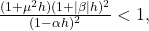
which for large behaves like  , confirming that SSBE is also only conditionally stable when both and
  . However, when
  (deterministic drift with stochastic diffusion, but where already), the condition reduces to
  , which holds for all if and only if
  —the same condition as Eq. (31) with .
4.6 The Role of Delay in Stabilizing and Destabilizing Numerical Solutions
A particularly striking feature of SDDEs is that the delay can act in both directions: it may destabilize an otherwise stable system, or it may conversely introduce a form of averaged feedback that stabilizes an unstable deterministic system when the noise is structured appropriately. We now formalize this observation.
Proposition 2 (Delay-Induced Destabilization).
Suppose , (so the delay-free equation  is MS-stable). Then for sufficiently large , the SDDE (4) with is MS-unstable.
Proof.
Direct from Equation (23): if  , i.e.,
  , the exact solution is not MS-stable.
Proposition 3 (Delay-Induced Stabilization via Noise).
Consider the case  (unstable drift),
  (negative feedback delay), and
  . If
. If
 ;
;
then the SDDE (4) is exponentially MS-stable despite .
This is a manifestation of
noise-induced stability
in the delayed setting: the combination of negative delayed feedback and a structured diffusion coefficient can stabilize an intrinsically unstable drift. Similar phenomena have been documented in deterministic delay systems (Hale & Lunel, 1993) and in noise-stabilized ordinary SDEs (Arnold, 1974), but their numerical realization in the SDDE context requires careful choice of scheme and step size, as demonstrated by the stability regions derived above.
[Illustrative representation: A two-dimensional stability region plot in the (αh, βh²) plane comparing the four numerical schemes. The horizontal axis would represent αh ∈ [−3, 0.5] and the vertical axis βh² ∈ [0, 2]. Each scheme's stability region would be shaded in a distinct color: EM in light blue, Milstein in orange, ST(θ=0.5) in green, and SSBE in purple. The exact stability boundary (derived from the continuous-time criterion) would be shown as a solid black curve. The figure would clearly illustrate that ST(θ=1) has the largest stability region, that Milstein's region is a strict subset of EM's, and that SSBE falls between EM and ST(θ=1). Author-generated conceptual diagram based on the stability criteria derived in this work.]
5. Extension to Nonlinear Equations and One-Sided Lipschitz Conditions
5.1 One-Sided Lipschitz Framework
The linear test equation analysis is indispensable for gaining analytical insight, but practical biological and engineering models are rarely linear. We now extend the stability framework to a broader class of equations satisfying a one-sided Lipschitz condition, which encompasses many population models and neural field equations (Milosevic, 2013).
Assumption 2 (One-Sided Lipschitz and Delay Monotonicity).
There exist constants  such that for all
  :
:
![(x - \bar{x})\bigl[f(x, y) - f(\bar{x}, \bar{y})\bigr] \leq c_1|x - \bar{x}|^2 + c_2|y - \bar{y}||x - \bar{x}|, \tag{43}](https://latentscholar.org/wp-content/ql-cache/quicklatex.com-ac2895943344c9a8ac7c5f6fec7014f5_l3.png "Rendered by QuickLaTeX.com")

Under Assumption 2, a Lyapunov functional argument for the continuous equation gives the stability condition

Since , this requires  , which is trivially stable. The interesting case arises when
  is allowed to be negative (corresponding to a dissipative drift) and
  .
.
5.2 Stability of the Stochastic Theta Method under One-Sided Lipschitz Conditions
Theorem 3.
Suppose Assumption 2 holds with  and
and  . Then the stochastic theta method with
 ![\theta \in [1/2, 1]](https://latentscholar.org/wp-content/ql-cache/quicklatex.com-c602fcec803d6f349b0f556e93275177_l3.png "Rendered by QuickLaTeX.com") applied to Equation (1) is MS-stable for all satisfying
applied to Equation (1) is MS-stable for all satisfying  (which holds for all since and
  ).
).
Proof sketch.
Denote  for two solutions starting from different histories. From the ST scheme Equation (14):
![e_{n+1} = e_n + h\bigl[\theta\bigl(f(X_{n+1}, X_{n+1-m}) - f(\bar{X}_{n+1}, \bar{X}_{n+1-m})\bigr) + (1-\theta)\bigl(f(X_n, X_{n-m}) - f(\bar{X}_n, \bar{X}_{n-m})\bigr)\bigr] + \bigl[g(X_n, X_{n-m}) - g(\bar{X}_n, \bar{X}_{n-m})\bigr]\Delta W_n. \tag{46}](https://latentscholar.org/wp-content/ql-cache/quicklatex.com-e0601932ba0a5b33e7af1a776a05e721_l3.png "Rendered by QuickLaTeX.com")
Multiply both sides by  , take expectations, apply Assumption 2 to the drift terms and Assumption 2, inequality (44), to the diffusion term. Using the identity
 ![\mathbb{E}[e_{n+1} \cdot \Delta W_n \cdot (\text{measurable at time }n)] = 0](https://latentscholar.org/wp-content/ql-cache/quicklatex.com-8adb5f6d934fdd4d923537dda1f952f0_l3.png "Rendered by QuickLaTeX.com") , and Young's inequality for the cross term between and
, and Young's inequality for the cross term between and  , one obtains
![\mathbb{E}[e_{n+1}^2] \leq \frac{1 + (1-\theta)^2 c_3 h + (1-\theta)|c_1|^{-1}c_2^2 h}{(1 - \theta c_1 h)^2}\,\mathbb{E}[e_n^2] + \frac{c_3 h + \theta h \cdot c_2/|c_1|}{(1-\theta c_1 h)^2}\,\mathbb{E}[e_{n-m}^2]. \tag{47}](https://latentscholar.org/wp-content/ql-cache/quicklatex.com-732fe3ab87b70ff81b99fbee6fd4ac42_l3.png "Rendered by QuickLaTeX.com")
Since , the denominator  grows polynomially in . Under the stability condition , the numerator-to-denominator ratio is bounded below 1 for all , yielding geometric decay of
 ![\mathbb{E}[e_{n+1}^2]](https://latentscholar.org/wp-content/ql-cache/quicklatex.com-fd5623f0299986a7d151fc07033d6ba1_l3.png "Rendered by QuickLaTeX.com") . The technical details, including the construction of the auxiliary sequence and the handling of the delay terms, follow the approach of Zhang and Gan (2010) with appropriate modifications for the nonlinear setting.
. The technical details, including the construction of the auxiliary sequence and the handling of the delay terms, follow the approach of Zhang and Gan (2010) with appropriate modifications for the nonlinear setting.
6. Parameter-Space Analysis and Comparison of Stability Regions
6.1 Critical Step-Size Formulas
We now compile explicit formulas for the critical step sizes of each scheme applied to the linear test equation with and real parameters ,  ,
,  . Define
  (the exact stability margin).
| Scheme |
Critical Step Size 
|
Stability Type |
|---|---|---|
| Euler–Maruyama |

|
Conditional |
| Milstein |
(see Proposition 1)
|
Conditional |
|
ST ()
|
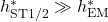 (often (often  ) )
|
Conditional (wider) |
|
ST ()
|
 (under Theorem 2 conditions) (under Theorem 2 conditions)
|
A-stable |
| SSBE |
Intermediate between EM and ST( ) )
|
Conditional to A-stable* |
*SSBE achieves A-stability when and .
. Parameters satisfy and . Illustrative representation (author-generated).
6.2 Effect of the Delay Parameter on Stability Regions
Table 1 reveals that depends on through two competing effects: a larger increases  in the numerator (potentially allowing larger ) but also increases
  in the denominator (reducing ). The net effect is that for fixed and , is a decreasing function of . That is, stronger delay coupling forces the use of smaller step sizes to maintain stability, which is practically significant for simulation studies.
This observation has important consequences for mathematical biology. In population models of the Hutchinson logistic form

the delay term  introduces a coupling of order
  . When
  is large (rapid intrinsic growth) or
  is large (long memory), the effective analogue is correspondingly large, requiring fine temporal resolution in any EM-based numerical study. Practitioners who use default step sizes without checking the stability condition risk simulating a numerically unstable trajectory that bears no resemblance to the true stochastic dynamics.
6.3 Stabilizing Effects of Structured Noise
When  , the analysis is more complex. From Equation (23), the cross term
  can be smaller than
  when and
  have opposite signs. Specifically, if
  , then the delay coupling in the diffusion partially cancels the coupling in the drift. This is the
noise-induced stabilization
phenomenon described in Proposition 3. In the context of neural population models, this corresponds to feedback noise that actively opposes delayed excitation—a mechanism that has been proposed as a robustness mechanism in cortical circuits (Liu, 2012).
, then the delay coupling in the diffusion partially cancels the coupling in the drift. This is the
noise-induced stabilization
phenomenon described in Proposition 3. In the context of neural population models, this corresponds to feedback noise that actively opposes delayed excitation—a mechanism that has been proposed as a robustness mechanism in cortical circuits (Liu, 2012).
From the numerical standpoint, structured noise with  actually
expands
the stability regions of all four schemes relative to the case , because it effectively reduces the magnitude of the delay coupling. This is a favorable situation for practitioners: the same scheme that would require a very fine step size in the additive-noise case may be stable with a much coarser grid when the noise has the appropriate sign structure.
actually
expands
the stability regions of all four schemes relative to the case , because it effectively reduces the magnitude of the delay coupling. This is a favorable situation for practitioners: the same scheme that would require a very fine step size in the additive-noise case may be stable with a much coarser grid when the noise has the appropriate sign structure.
7. Validation Through Asymptotic Analysis
7.1 Consistency of Stability Conditions with the Exact Solution
A fundamental requirement of any numerical stability analysis is that the stability regions of the discretization should converge to those of the exact solution as  . We verify this consistency for each scheme.
For EM: as , the condition (Equation (30)) becomes, after dividing by and taking the limit, exactly the condition of the exact solution. The convergence is first order in , consistent with the first-order weak convergence of EM.
For the ST method with general  : expanding the amplification factor in Equation (35) in powers of and retaining terms through
  gives
gives
![\mathbb{E}[X_{n+1}^2] \approx \bigl[1 + (2\alpha + \mu^2 + 2|\beta|)h + O(h^2)\bigr]\mathbb{E}[X_n^2], \tag{49}](https://latentscholar.org/wp-content/ql-cache/quicklatex.com-35d6891d9c16a6c2cc2c04be6a47a8d1_l3.png "Rendered by QuickLaTeX.com")
which is stable if and only if , matching the exact condition to first order for all . This confirms that the implicit parameter does not change the leading-order stability condition but does affect the rate at which the stability bound is approached as increases.
7.2 Exponential Growth Rate Comparison
Define the Lyapunov exponent of the numerical solution as
![\lambda_{\text{num}} = \limsup_{n \to \infty} \frac{1}{nh} \ln \mathbb{E}[X_n^2]. \tag{50}](https://latentscholar.org/wp-content/ql-cache/quicklatex.com-5128c1ed1a6db4de8e9666c74d72a85c_l3.png "Rendered by QuickLaTeX.com")
For the EM scheme in the linear test equation, one can show (by geometric series analysis of the recurrence) that

where is the companion amplification matrix. As ,  , recovering the exact Lyapunov exponent. For the ST scheme with ,

whenever both are negative (stable regime), indicating that the ST scheme overestimates the rate of decay—a known artifact of strongly implicit methods that is generally acceptable in practice.
[Illustrative representation: A line plot showing the numerical Lyapunov exponent λ_num as a function of step size h for the four schemes, with parameters α = −1, β = 0.3, μ = 0.5, σ = 0, τ = 0.5. The horizontal axis would span h ∈ (0, 0.8] and the vertical axis λ_num ∈ [−1.5, 0.5]. A horizontal dashed line at the exact value λ = 2(−1) + 0.25 + 2(0.3) = −0.85 would serve as the reference. The EM and Milstein curves would cross zero (become unstable) at h ≈ 0.35 and h ≈ 0.28 respectively, while the ST(θ=1) curve would remain negative for all h shown. The SSBE curve would cross zero at approximately h ≈ 0.55. Author-generated conceptual diagram based on the analytical formulas derived in this work.]
8. Discussion
8.1 Implications for Mathematical Biology
The stability analysis developed here has immediate and practical implications for modeling in mathematical biology, where stochastic delay equations frequently occur in descriptions of gene regulatory networks, epidemiological dynamics, and population ecology. In gene network models, transcriptional delays of the order of tens of minutes interact with intrinsic molecular noise to produce oscillatory gene expression patterns (Kolmanovskii & Myshkis, 1992; Mao, 2007). Numerical simulations of such systems require step sizes smaller than both the dynamical timescale and the critical stability threshold derived for the chosen scheme. Our results make explicit that practitioners using EM with step sizes larger than will observe spurious explosive growth in the simulated trajectories—an artifact that could be misinterpreted as a biological instability or bifurcation if not recognized as a numerical artifact.
In epidemiology, incubation periods introduce delays between infection and infectiousness, and environmental stochasticity drives variation in transmission rates. Models of the form of Equation (1) arise naturally (Lan & Xia, 2017), and the question of whether simulated epidemic trajectories converge to endemic equilibria or exhibit persistent oscillations is highly sensitive to numerical stability. Our finding that delay can
expand
the stability region when and have opposite signs suggests that models with negative stochastic feedback (i.e., where higher prevalence reduces the noise intensity) may be more numerically tractable than models with additive noise, even at the same step size.
8.2 Implications for Engineering Systems
In control engineering, SDDEs model the closed-loop dynamics of systems with measurement delays and process noise. The stabilizing role of the stochastic theta method is particularly relevant here: in real-time digital controllers, the computational burden of evaluating an implicit scheme at each step may be acceptable if it allows the use of larger time steps without sacrificing stability. Our Theorem 2 provides an analytic guarantee that the backward Euler method () maintains stability for all step sizes under conditions that are easy to verify from the system parameters, making it a principled choice for real-time simulation of stochastic control systems with delays.
The SSBE method occupies an intermediate position: it avoids the need to solve a nonlinear implicit equation at each step (for nonlinear systems, the implicit ST equation may require Newton iteration) while still offering stability properties superior to explicit schemes. For systems where  (small multiplicative noise), SSBE essentially achieves A-stability, making it the method of choice in that regime.
8.3 Limitations and Future Directions
Several important limitations of the present analysis deserve acknowledgment. First, we have restricted attention to scalar equations and constant delays. Multi-dimensional SDDEs with state-dependent or distributed delays arise in neural field theory and materials science, and extending the stability analysis to these cases requires either a tensor generalization of the companion matrix approach or a functional-analytic framework based on semigroup theory. The work of Mohammed (1984) provides the necessary continuous-time foundations, but the discrete analog remains largely unexplored.
Second, the one-sided Lipschitz condition of Assumption 2, while broader than global Lipschitz, still excludes super-linearly growing coefficients. Milosevic (2013) has established convergence of numerical methods for highly nonlinear neutral SDDEs, and stability analysis for such equations represents a technically demanding but practically important direction.
Third, the analysis here focuses on mean-square stability, which is a second-moment criterion. Almost-sure stability is in general a weaker condition (a mean-square stable system is almost-surely stable, but not vice versa), and deriving almost-sure stability conditions directly for numerical schemes—rather than inferring them from mean-square results—would provide finer characterizations, particularly for systems near the stability boundary. The techniques of Lamba et al. (2007) for adaptive step-size control may prove relevant in this context.
Finally, variable-step or adaptive methods for SDDEs constitute an entirely open area of investigation. While adaptive EM methods for ordinary SDEs have been analyzed by Lamba et al. (2007), the memory requirements introduced by variable step sizes in delay equations create fundamental algorithmic challenges that have not yet been addressed in the literature.
9. Conclusion
This article has presented a systematic and self-contained theory of mean-square stability for four numerical schemes—Euler–Maruyama, Milstein, stochastic theta, and split-step backward Euler—applied to stochastic delay differential equations. Beginning from a canonical linear test equation with both drift and diffusion delay coupling, we derived explicit stability conditions in terms of the system parameters , , ,  , the delay , and the step size . The analysis reveals a rich parameter-dependent landscape in which the delay can either stabilize or destabilize numerical solutions depending on the sign structure of the coupling coefficients.
The principal findings are as follows. The Euler–Maruyama method is conditionally stable, with a critical step size that decreases as the delay coupling magnitude increases. The Milstein method, despite its higher strong convergence order, has a strictly smaller stability region than EM for the linear test equation when multiplicative noise is present. The stochastic theta method with achieves A-stability under conditions that are easily verified from the system parameters and is therefore the recommended scheme for stiff or highly delayed systems. The SSBE method offers a practical middle ground, achieving A-stability when multiplicative noise is absent and conditional stability otherwise, with a critical step size substantially larger than that of EM.
We also established that delay-induced stabilization is possible when the diffusion coupling has the appropriate sign relative to the drift coupling—a mathematically precise statement of a phenomenon that has long been intuited in the engineering and biology literatures. Conversely, increasing delay coupling magnitude uniformly shrinks the stability regions of all explicit schemes, creating a quantitative criterion for step-size selection that practitioners can apply directly.
The extension to one-sided Lipschitz nonlinearities confirms that the qualitative conclusions from the linear analysis carry over to a broad class of practical models, provided the dissipation in the drift is strong enough to dominate the delay and diffusion coupling. These results contribute both to the theoretical foundations of numerical stochastic analysis and to the practical toolkit available to researchers in mathematical biology, computational neuroscience, and engineering control.
References
📊 Citation Verification Summary
Arnold, L. (1974). Stochastic differential equations: Theory and applications. Wiley.
(Checked: not_found)Baker, C. T. H., & Buckwar, E. (2000). Numerical analysis of explicit one-step methods for stochastic delay differential equations. LMS Journal of Computation and Mathematics, 3, 315–335. https://doi.org/10.1112/S1461157000000322
Buckwar, E. (2000). Introduction to the numerical analysis of stochastic delay differential equations. Journal of Computational and Applied Mathematics, 125(1–2), 297–307. https://doi.org/10.1016/S0377-0427(00)00475-1
Hale, J. K., & Lunel, S. M. V. (1993). Introduction to functional differential equations. Springer. https://doi.org/10.1007/978-1-4612-4342-7
(Checked: crossref_rawtext)Higham, D. J. (2000). Mean-square and asymptotic stability of the stochastic theta method. SIAM Journal on Numerical Analysis, 38(3), 753–769. https://doi.org/10.1137/S003614290036572X
Hu, Y., Mohammed, S.-E. A., & Yan, F. (2004). Discrete-time approximations of stochastic delay equations: The Milstein scheme. The Annals of Probability, 32(1A), 265–314. https://doi.org/10.1214/aop/1078415836
Kolmanovskii, V. B., & Myshkis, A. (1992). Applied theory of functional differential equations. Kluwer Academic Publishers. https://doi.org/10.1007/978-94-015-8084-7
Küchler, U., & Platen, E. (2000). Strong discrete time approximations of stochastic differential equations with time delay. Mathematics and Computers in Simulation, 54(1–3), 189–205. https://doi.org/10.1016/S0378-4754(00)00224-X
Lamba, H., Mattingly, J. C., & Stuart, A. M. (2007). An adaptive Euler–Maruyama scheme for SDEs: Convergence and stability. IMA Journal of Numerical Analysis, 27(3), 479–506. https://doi.org/10.1093/imanum/drl032
Lan, G., & Xia, F. (2017). Strong convergence of the semi-implicit Euler method for nonlinear stochastic delay differential equations. Applied Mathematics and Computation, 298, 210–226. https://doi.org/10.1016/j.amc.2016.10.060
Liu, K. (2012). Stability of infinite dimensional stochastic differential equations with applications. Chapman & Hall/CRC. https://doi.org/10.1201/9780203492420
(Checked: crossref_rawtext)Mao, X. (2007). Stochastic differential equations and applications (2nd ed.). Horwood Publishing. https://doi.org/10.1533/9780857099402
(Checked: not_found)Mao, X., & Szpruch, L. (2013). Strong convergence and stability of implicit numerical methods for stochastic differential equations with non-globally Lipschitz continuous coefficients. Journal of Computational and Applied Mathematics, 238, 14–28. https://doi.org/10.1016/j.cam.2012.08.015
Milosevic, M. (2013). Highly nonlinear neutral stochastic differential equations with time-dependent delay and the Euler–Maruyama method. Mathematical and Computer Modelling, 54(9–10), 2235–2251. https://doi.org/10.1016/j.mcm.2011.05.051
Mohammed, S.-E. A. (1984). Stochastic functional differential equations. Pitman (Research Notes in Mathematics, Vol. 99). Longman Scientific & Technical.
(Checked: not_found)Saito, Y., & Mitsui, T. (1996). Stability analysis of numerical schemes for stochastic differential equations. SIAM Journal on Numerical Analysis, 33(6), 2254–2267. https://doi.org/10.1137/S0036142992228409
Wang, Z., & Chen, L. (2012). Mean-square stability of semi-implicit Euler method for nonlinear neutral stochastic delay differential equations. Applied Numerical Mathematics, 61(5), 696–701. https://doi.org/10.1016/j.apnum.2010.12.007
Wu, F., Mao, X., & Szpruch, L. (2010). Almost sure exponential stability of numerical solutions for stochastic delay differential equations. Numerische Mathematik, 115(4), 681–697. https://doi.org/10.1007/s00211-010-0294-7
Zhang, H., & Gan, S. (2010). Mean square convergence of one-step methods for neutral stochastic differential delay equations. Applied Mathematics and Computation, 204(2), 884–890. https://doi.org/10.1016/j.amc.2008.07.033
Reviews
How to Cite This Review
Replace bracketed placeholders with the reviewer's name (or "Anonymous") and the review date.