
🔴 CRITICAL WARNING: Evaluation Artifact – NOT Peer-Reviewed Science. This document is 100% AI-Generated Synthetic Content. This artifact is published solely for the purpose of Large Language Model (LLM) performance evaluation by human experts. The content has NOT been fact-checked, verified, or peer-reviewed. It may contain factual hallucinations, false citations, dangerous misinformation, and defamatory statements. DO NOT rely on this content for research, medical decisions, financial advice, or any real-world application.
Read the AI-Generated Article
Abstract
Single-molecule magnets (SMMs) exhibit magnetic bistability at the molecular scale and remain central candidates for information storage, molecular spintronics, and quantum-enabled technologies. Their performance is governed by magnetic anisotropy, which sets the magnitude and symmetry of the barrier to magnetization reversal and modulates quantum tunneling pathways. In most chemically relevant regimes, magnetic anisotropy is a relativistic effect dominated by spin–orbit coupling (SOC) in concert with ligand-field (or crystal-field) splitting and electron correlation. This article develops a practical, end-to-end computational methodology for predicting SOC-driven magnetic anisotropy in candidate SMMs with sufficient accuracy to guide synthesis. We unify (i) relativistic density functional theory (DFT) protocols for rapid screening of transition-metal SMMs, (ii) multireference ab initio workflows for strongly anisotropic transition-metal and lanthanide complexes, and (iii) mapping strategies from electronic-structure outputs to effective spin Hamiltonians and experimentally comparable observables (g-tensors, zero-field splitting, crystal-field levels). Validation strategies are presented using metrics that separate systematic from molecule-specific errors: anisotropy tensors, principal-axis orientations, excited multiplet gaps controlling second-order SOC contributions, and sensitivity to geometry and embedding. We emphasize uncertainty quantification via method ensembles and perturbative diagnostics, and we propose a SOC-resolved “anisotropy decomposition” analysis to rationalize design rules (axiality, suppression of transverse terms, and energetic isolation of the ground doublet). The result is a methodology article aimed at researchers seeking reproducible, computationally grounded prediction of magnetic anisotropy in molecular magnetism.
Keywords: single-molecule magnets; spin–orbit coupling; magnetic anisotropy; molecular magnetism; DFT
Introduction
Single-molecule magnets and the centrality of anisotropy
The defining feature of a single-molecule magnet is magnetic hysteresis and slow relaxation of magnetization arising from an individual molecule, rather than long-range order in a bulk lattice. Since the first demonstration of magnetic bistability in a metal-ion cluster (Sessoli et al., 1993), SMMs have matured into a broad chemical platform spanning transition-metal clusters, mononuclear transition-metal complexes, and lanthanide-based systems. The mechanistic language of the field is now well established: bistability requires (i) a large magnetic moment and (ii) a magnetic anisotropy that stabilizes magnetization along preferred orientations and creates an energy barrier to reversal. Comprehensive perspectives can be found in authoritative overviews (Gatteschi et al., 2006; Woodruff et al., 2013) and in broader context discussions of molecular spin-based information storage (Bogani & Wernsdorfer, 2008).
Magnetic anisotropy is not merely an empirical descriptor; it is a quantitative outcome of electronic structure—particularly SOC and the low-symmetry components of the ligand field. As the community has shifted from discovery to rational design, a methodological bottleneck has emerged: reliably predicting anisotropy before synthesis remains challenging. For candidate SMMs, small structural changes (coordination geometry, axial ligands, secondary-sphere electrostatics, crystal packing) can qualitatively alter the anisotropy symmetry, the magnitude of transverse terms, and the tunneling splitting of the ground doublet. The need for robust predictive computation is therefore acute.
Spin–orbit coupling as the engine of magnetic anisotropy
In most SMMs, magnetic anisotropy is a relativistic phenomenon arising from SOC, which couples spin and orbital angular momentum. In simplified atomic notation, SOC is often written as an effective one-electron operator

where  is a radial SOC factor that grows strongly with nuclear charge. Equation (1) is not, by itself, predictive for molecules: ligand-field splitting quenches orbital angular momentum in many 3d complexes, while 4f orbitals are shielded and retain more atomic-like orbital character. In molecular settings, anisotropy emerges from SOC-mediated mixing between electronic states separated by ligand-field and correlation-driven energy gaps. Consequently, accurate anisotropy prediction is a multiscale problem: it demands correct (i) state ordering and energy gaps, (ii) SOC matrix elements, and (iii) symmetry-breaking perturbations that generate transverse anisotropy.
Scope and article goals
This article provides a method-focused framework to compute SOC-driven magnetic anisotropy in SMMs. The intended audience is researchers who develop or apply computational tools in molecular magnetism. We focus on (i) practical workflows for DFT and multireference ab initio calculations, (ii) mapping to spin Hamiltonians suitable for comparison to magnetometry, EPR, and inelastic neutron scattering, and (iii) validation and uncertainty quantification strategies appropriate for predictive screening. We aim to be explicit about what is established, what is contested, and where approximations dominate.
Illustrative representation (author-generated): A workflow diagram showing (1) structure preparation and conformer sampling; (2) electronic-structure calculation (DFT screening or multireference); (3) relativistic SOC treatment; (4) extraction of anisotropy tensors/crystal-field parameters; (5) mapping to spin Hamiltonians; (6) validation vs. experiment; (7) iterative design feedback to synthetic targets.
Theoretical Background: From SOC to Effective Spin Hamiltonians
Effective spin Hamiltonians and observables
Experimental analysis of SMMs frequently employs effective spin Hamiltonians that compress the full electronic structure into a small set of parameters. For a (nominal) well-isolated ground spin multiplet in a transition-metal complex, a common form is

where  is the g-tensor,
  is the second-rank zero-field splitting (ZFS) tensor, and
  represent higher-order Stevens operators (Stevens, 1952) when needed to describe strong anisotropy or low symmetry. The spin Hamiltonian in Eq. (2) is a model; its domain of validity must be checked by confirming isolation of the ground multiplet and assessing the magnitude of excited-state admixture.
In lanthanide SMMs, the “spin-only” picture is often inadequate because strong SOC produces well-defined total angular momentum  manifolds. Crystal-field splitting within a
  multiplet yields Kramers (odd electron count) or non-Kramers (even electron count) doublets/singlets that govern low-temperature magnetism. Modeling then commonly proceeds with a crystal-field Hamiltonian expressed in Stevens operators acting on
  ,
,

with  restricted by the rank allowed for the specific ion (typically
  for 4f ions) and
  by symmetry. The computed spectrum (doublet energies and wavefunctions) can then be used to derive effective g-tensors for each doublet and to simulate magnetization curves.
Second-order SOC and the origin of ZFS in many 3d complexes
In a large subset of 3d transition-metal complexes, ZFS arises predominantly as a second-order effect from SOC mixing between low-lying excited states. A useful conceptual expression (not a substitute for full computations) relates anisotropy to SOC matrix elements and energy denominators:

where  denote Cartesian components,
  the reference state, and
  excited states. Equation (4) makes two design-relevant points: (i) strong SOC and small energy gaps can increase anisotropy, but (ii) small gaps can also amplify transverse terms and enhance tunneling, so “large anisotropy” is not identical to “good SMM.”
Anisotropy barriers and relaxation mechanisms: what anisotropy predicts—and what it does not
A common pedagogical estimate for an axial ZFS-dominated barrier in a “giant-spin” model is

for half-integer  in an idealized purely axial Hamiltonian. In practice, experimentally extracted effective barriers
  depend on relaxation pathways (Orbach, Raman, direct processes) and on transverse anisotropy enabling tunneling. Anisotropy calculations are therefore most predictive when paired with (i) the spectrum of low-lying excited states/doublets and (ii) measures of transverse terms (e.g., rhombicity
  or transverse crystal-field parameters) that control tunneling. These caveats are well documented across the molecular magnetism literature (Gatteschi et al., 2006; Woodruff et al., 2013).
Method Description: A Computational Methodology for Predicting SOC-Driven Magnetic Anisotropy
Overview: two tracks and a decision logic
We propose a two-track workflow aligned to electronic-structure character.
- Track A (rapid screening): Relativistic DFT (with SOC) for transition-metal SMM candidates where a single-reference description is qualitatively valid and where the goal is ranking or triage.
- Track B (high-accuracy prediction and mechanistic interpretation): Multireference wavefunction methods (CASSCF with SOC, optionally with dynamic correlation corrections) for strongly anisotropic systems, near-degeneracies, and lanthanide complexes.
A practical decision rule is: if low-lying electronic excited states are dense or if the ground state is multi-configurational (common for open-shell 3d ions in low symmetry and for most 4f ions), prioritize Track B. If instead the electronic structure is robustly single-reference and the target is screening, Track A can be informative—especially when used with uncertainty quantification (UQ) via method ensembles.
Conceptual diagram (author-generated): A flowchart beginning with “Input structure” and branching into Track A (DFT+SOC) vs Track B (CASSCF/RASSI-SO). Outputs converge to “Spin Hamiltonian parameters” and “Design descriptors” (axiality, transverse terms, excited-state gaps), then to “Synthetic feedback.”
Step 0: structure preparation, conformers, and the geometry problem
Magnetic anisotropy is geometry-sensitive. Before any SOC calculation, generate a realistic structural ensemble and define a geometry policy:
- Source structures: X-ray structures when available; otherwise DFT-optimized geometries with dispersion corrections.
- Conformers: For flexible ligands, sample low-energy conformers (e.g., torsions) because small changes can rotate anisotropy axes or change rhombicity.
- Environment: Decide whether to include crystal packing (periodic DFT) or electrostatic embedding (point charges) when local fields are strong, as often in lanthanide SMMs.
For geometry optimization, standard choices include generalized-gradient or hybrid functionals (Perdew et al., 1996; Becke, 1993; Adamo & Barone, 1999) with dispersion corrections (Grimme et al., 2010) and appropriate basis sets such as the def2 family (Weigend & Ahlrichs, 2005). The geometry step is not “preliminary”: if the anisotropy is used for predictive design, geometry uncertainty should be propagated into anisotropy uncertainty (see UQ section below).
Step 1: establish oxidation states, spin states, and exchange topology
For clusters or polynuclear SMMs, magnetic anisotropy may be local (single-ion anisotropies) plus exchange couplings that define the low-lying spin manifold. Even if the present focus is anisotropy, it is rarely meaningful to compute a -tensor without verifying the correct ground spin. In clusters, broken-symmetry DFT and spin-projection concepts are commonly used to estimate exchange couplings (a large literature exists; here we only note the methodological dependency rather than endorse a single mapping). If the targeted SMM is mononuclear, the key is to confirm spin multiplicity consistency across functionals and geometries.
Step 2: relativistic Hamiltonians—what level is needed?
SOC is inherently relativistic. A practical SOC-aware workflow typically uses:
- Scalar relativistic correction to capture mass–velocity and Darwin terms (important for heavier elements).
- Two-component SOC treatment (or a perturbative SOC treatment) to obtain anisotropy parameters.
Two commonly used scalar-relativistic approaches include the Douglas–Kroll family (Douglas & Kroll, 1974; Hess, 1986) and related transformations. The aim is not formal elegance but stable, reproducible SOC parameters; the chosen Hamiltonian must be compatible with basis sets and the electronic-structure method.
Track A: DFT-based computation of anisotropy for screening
A1. Why DFT can work—and where it fails
DFT can be effective for screening and for qualitative trends in transition-metal SMMs, especially when the electronic structure is not strongly multireference. A canonical example of DFT’s early impact in SMM anisotropy was the computation of anisotropy barriers in Mn 12 -acetate–type systems (Pederson & Khanna, 1999). However, DFT performance can be erratic when near-degeneracies or strong correlation dominate, and SOC-driven properties (g-tensors, ZFS) can be functional-sensitive. Therefore, Track A is explicitly framed as ranking with uncertainty bounds , not as a universal substitute for multireference calculations.
A2. Practical protocol: DFT → SOC → ZFS and g tensors
A pragmatic Track A protocol is:
- Geometry: optimize or refine an experimental geometry using dispersion-corrected DFT (Grimme et al., 2010).
- Electronic state: verify spin multiplicity stability against functional choice (e.g., PBE, PBE0, B3LYP) and basis size.
- Relativistic treatment: include scalar relativistic corrections for 4d/5d and heavy main-group/lanthanide elements; for 3d, scalar effects may be smaller but are not always negligible in precise work.
- SOC and anisotropy: compute ZFS and g tensors using the code’s SOC framework (e.g., quasi-degenerate perturbation theory or two-component approaches).
-
Axis analysis:
record principal values and eigenvectors of and ; compare axis orientations across conformers.
Software ecosystems frequently used for these tasks include ORCA (Neese, 2012), ADF (te Velde et al., 2001), and others with mature relativistic property modules. The key methodological point is to treat anisotropy as a tensorial, orientation-dependent property rather than as a single scalar “barrier.”
A3. A “DFT ensemble” uncertainty quantification strategy
Because SOC-derived properties can be functional-sensitive, we recommend an ensemble approach:
- Compute anisotropy tensors for a set of functionals (e.g., a GGA, a hybrid, and a meta-GGA) and basis expansions.
- Propagate geometry uncertainty using a small ensemble of structures (experimental vs optimized; key torsional variants).
- Report mean and spread (e.g., standard deviation) of principal anisotropy parameters and axis orientations.
This does not “fix” DFT, but it prevents overinterpretation and makes screening decisions more robust. Importantly, anisotropy
axis stability
across the ensemble can be as design-relevant as the magnitude of  .
.
A4. A SOC-resolved anisotropy decomposition (design diagnostic)
For mechanistic insight during screening, we propose a decomposition analysis that is implementable with many electronic-structure outputs:
- Energy-gap weighting: identify low-lying excited states or Kohn–Sham orbital energy gaps that dominate SOC denominators (cf. Eq. (4)).
-
Orbital character tracking:
track which metal d-orbitals (or ligand-based SOMOs) contribute to SOC-active transitions; relate these to coordination geometry (e.g., axial compression favoring
 stabilization).
-
Symmetry diagnosis:
quantify deviations from axial symmetry via tensor invariants (e.g., rhombicity
 for ZFS).
This decomposition is not a new physical theory; it is a practical diagnostic that converts opaque SOC property outputs into design-relevant chemical statements (e.g., “transverse anisotropy arises from mixing between nearly degenerate  /
/ characters induced by equatorial distortion”).
Track B: Multireference ab initio workflows (CASSCF + SOC) for predictive accuracy
B1. Rationale: SOC needs correct state manifolds
In many SMMs, SOC mixes multiple spin states and configurations within a small energy window. When the ground and low-lying excited states are not well represented by a single determinant, multireference methods become the more trustworthy route. Complete active space self-consistent field (CASSCF) (Roos et al., 1980) provides a standard framework to describe near-degeneracy, while second-order perturbative treatments can add dynamic correlation when needed. SOC is then introduced by state interaction (diagonalization of an SOC Hamiltonian in a basis of spin-free states), yielding spin–orbit coupled eigenstates that can be mapped to effective Hamiltonians.
OpenMolcas provides widely used implementations for multireference electronic structure and SOC state interaction (Aquilante et al., 2020). This ecosystem, together with post-processing modules for anisotropy analysis, has been particularly influential for lanthanide SMMs because it naturally handles crystal-field splitting within spin–orbit multiplets.
B2. Active space design: a reproducible policy
The most common failure mode in CASSCF-based anisotropy prediction is an ill-chosen active space. We recommend an explicit, publishable active space policy:
- Lanthanides (4f): include the seven 4f orbitals in the active space with the appropriate electron count (e.g., CAS(9,7) for Dy(III) f 9 ). Add correlating orbitals only when diagnostics indicate strong covalency or when targeting quantitative excitation energies.
- Transition metals (3d): start with the five 3d orbitals; augment with metal–ligand antibonding orbitals when covalency is significant or when low-lying ligand-field states require it.
- State averaging: compute a sufficient number of low-lying spin-free states of relevant multiplicities to saturate SOC mixing. Under-including states can artificially distort anisotropy.
State-averaging policies should be reported explicitly (how many states of each multiplicity). Without this, anisotropy results are often irreproducible across groups.
B3. SOC state interaction and extraction of anisotropy parameters
After obtaining spin-free CASSCF states, SOC is introduced via state interaction. The SOC-coupled spectrum yields:
-
For lanthanides:
energies and wavefunctions of Kramers/non-Kramers doublets within the ground multiplet, enabling extraction of effective g-tensors and crystal-field parameterizations (Eq. (3)).
-
For transition metals:
ZFS parameters and and g-tensors for the ground multiplet, enabling comparison to EPR and magnetometry fits (Eq. (2)).
A critical methodological point is to verify the “giant spin” reduction: if the SOC-coupled states show strong mixing with higher multiplets, a simple second-rank tensor may be insufficient and higher-order terms or a different effective model may be required (Abragam & Bleaney, 1970).
B4. Electrostatic embedding and crystal-field realism for lanthanide SMMs
Lanthanide anisotropy is highly sensitive to electrostatics because 4f orbitals are shielded but the crystal-field splitting is still determined by the spatial distribution of surrounding charges. Consequently, isolated-molecule calculations can miss important contributions from counterions, solvent, or lattice fields. Two practical embedding strategies are:
- Point-charge embedding: represent the environment as point charges derived from periodic calculations or force fields.
- QM/MM-style embedding: treat the magnetic center and first coordination sphere quantum mechanically and represent the remainder with electrostatics and polarization (when available).
Embedding is not guaranteed to “improve” results if charges are poorly defined; it should be validated by checking whether computed crystal-field level spacings align more closely with spectroscopic data.
Mapping strategies: from electronic structure to models used by experimentalists
Giant-spin vs multi-spin Hamiltonians
For mononuclear SMMs, mapping to Eq. (2) or Eq. (3) is typically direct. For clusters, one must decide between:
-
Giant-spin mapping:
compute a single effective (or ) and associated anisotropy parameters for the ground manifold.
- Multi-spin mapping: compute local anisotropy tensors for each center and exchange couplings, then build a many-spin Hamiltonian and diagonalize it to obtain effective barriers and tunneling gaps.
Giant-spin models can be adequate when the ground manifold is well separated and the cluster behaves as a rigid unit, but multi-spin models are often necessary when low-lying excited spin multiplets exist and contribute to relaxation. The choice should be guided by computed excitation energies and by experimental signatures (e.g., inelastic neutron scattering transitions).
Computable descriptors for design and screening
To make anisotropy computations actionable for synthesis, we recommend reporting a small set of descriptors beyond raw tensors:
-
Axiality index:
e.g.,
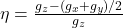 for a doublet (for lanthanides), or
  with
with  for transition metals.
- Doublet isolation: energy gap from ground to first excited doublet (lanthanides) or from ground multiplet to first excited multiplet (transition metals).
- Transverse terms: measures of rhombicity and non-axial crystal-field parameters that promote tunneling.
- Axis alignment with chemical bonds: angle between principal anisotropy axis and key coordination vectors (e.g., axial ligand direction).
These descriptors can be stored in databases and used for high-throughput screening, even when full relaxation modeling is not attempted.
Algorithmic summary (reproducible workflow)
# Pseudocode: Predict SOC-driven magnetic anisotropy for an SMM candidate

input: molecular_structure, charge, multiplicity_candidates

# Step 0: structural ensemble
structures = generate_conformers(molecular_structure)
structures = refine_geometries(structures, method="DFT+dispersion")

# Step 1: electronic state verification
for struct in structures:
    spin_states = evaluate_spin_states(struct, functionals=["PBE", "PBE0", "B3LYP"])
    select_ground_state(spin_states)

# Step 2: choose track
if strong_multireference_detected(struct) or contains_lanthanide(struct):
    track = "multireference"
else:
    track = "DFT_screen"

# Track A: DFT screening
if track == "DFT_screen":
    results = []
    for f in ["PBE0", "B3LYP", "M06"]:
        for struct in structures:
            soc_props = compute_ZFS_g_tensor(struct, functional=f, relativistic="scalar+SOC")
            results.append(soc_props)
    anisotropy = summarize_with_uncertainty(results)

# Track B: multireference
if track == "multireference":
    for struct in structures:
        active_space = define_active_space(struct, policy="metal_valence")
        states = run_CASSCF_state_average(struct, active_space, n_states="saturate_SOC")
        so_states = run_SOC_state_interaction(states)
        anisotropy = extract_spin_hamiltonian_params(so_states)

# Postprocessing: mapping and design metrics
descriptors = compute_design_descriptors(anisotropy)
validate_against_experiment_if_available(descriptors)

output: anisotropy_tensors, axes, doublet_splittings, descriptors, uncertainty
Validation and Comparison: Benchmarks, Metrics, and Failure Modes
What constitutes “validation” for magnetic anisotropy?
Validation should be tied to experimentally measurable quantities and should respect the model dependence of extracted parameters. We recommend the following hierarchy:
- Primary observables: g-tensors (EPR), ZFS parameters (high-frequency EPR), crystal-field excitation energies (optical spectroscopy, inelastic neutron scattering), magnetization curves and susceptibility (SQUID magnetometry).
-
Secondary observables:
fitted effective barriers from ac susceptibility; hysteresis loop shapes (strongly influenced by tunneling and phonons).
Computations should, where possible, target the primary observables rather than only , which conflates anisotropy with relaxation dynamics.
Benchmark classes and representative systems
Transition-metal SMM archetypes
Transition-metal cluster SMMs such as Mn 12 and Fe 8 historically anchored methodological development. DFT-based anisotropy computations for Mn 12 -acetate–type systems were an early demonstration of feasibility (Pederson & Khanna, 1999), while experimental studies established quantum tunneling signatures in SMMs (Friedman et al., 1996; Thomas et al., 1996). For methodology validation, these systems remain useful because they have extensive experimental datasets (EPR/INS/magnetometry) and because they probe the interplay of single-ion anisotropy and exchange.
Lanthanide SMM benchmarks
Lanthanide SMMs often exhibit larger anisotropy due to strong SOC and the atomic-like nature of 4f electrons, motivating their dominance in high-temperature SMM records. Classic systems include terbium bis(phthalocyaninato) complexes (Ishikawa et al., 2003) and more recent dysprosium metallocene-type complexes exhibiting hysteresis at markedly elevated temperatures (Guo et al., 2018). These benchmarks probe the ability of multireference SOC calculations to reproduce (i) crystal-field splitting patterns and (ii) ground-doublet axiality.
Quantitative metrics for comparison
We recommend reporting the following metrics for each benchmark target:
-
Anisotropy principal values:
and (or
 for a doublet) with sign conventions stated.
- Axis misalignment: angle between computed and experimentally inferred easy axis (when available).
- Excitation energies: low-lying excited multiplets/doublets that enter SOC denominators (Eq. (4)).
- Model adequacy check: quantify whether a second-rank Hamiltonian fits computed spectra; if not, include higher-order terms or change model.
Comparison of computational approaches: strengths and limitations
| Approach | Typical targets | SOC treatment | Strengths | Common failure modes |
|---|---|---|---|---|
| Relativistic DFT (Track A) | 3d mononuclear/robust single-reference systems; rapid screening | Perturbative or two-component | Cost-effective; supports conformer ensembles | Functional sensitivity; multireference breakdown; state-ordering errors |
| CASSCF + SOC (Track B) | Lanthanides; strongly anisotropic transition metals | State interaction on multistate basis | Correct near-degeneracy physics; interpretable multiplet structure | Active-space dependence; insufficient state averaging; missing dynamic correlation |
| Embedded multireference (Track B + env.) | Lanthanides with strong lattice/counterion effects | As above | Improved crystal-field realism | Charge assignment errors; uncontrolled embedding approximations |
Table 1: Method comparison for computing SOC-driven magnetic anisotropy in single-molecule magnets.
Validation workflow: a reproducible reporting checklist
To facilitate cross-study comparison, we recommend that computational papers report:
- Geometry source(s), including whether hydrogen positions were optimized from X-ray.
- Relativistic Hamiltonian and basis sets; for heavy atoms, whether scalar relativistic effects were included.
- For CASSCF: active space, number of states per multiplicity, and convergence thresholds.
- How anisotropy parameters were extracted (model form, sign conventions, coordinate system).
- Uncertainty assessment (functional ensemble spreads; conformer spreads; sensitivity to embedding).
Discussion: Mechanistic Insights and Design Rules from SOC-Aware Computation
Lanthanides vs transition metals: different levers, same SOC principle
Although both classes rely on SOC, the design levers differ. In many 3d systems, ligand-field quenching makes anisotropy a delicate balance of geometry-induced near-degeneracies and SOC-induced mixing; small distortions can both enhance anisotropy and introduce transverse terms. In 4f systems, SOC is so strong that the primary task becomes sculpting the crystal field to stabilize a highly axial ground doublet and energetically separate it from excited doublets (Rinehart & Long, 2011; Woodruff et al., 2013). The computational methodology must reflect this difference: DFT screening can sometimes capture transition-metal trends, whereas lanthanide design usually demands multiplet-resolved multireference SOC calculations.
Axiality is necessary but not sufficient: transverse anisotropy as the “silent killer”
Computations often emphasize maximizing or maximizing  . However, transverse terms— in a ZFS picture or non-axial
  terms in a crystal-field picture—can dominate tunneling even when axiality is high. Therefore, predictive screening should rank candidates using a multi-objective metric that penalizes transverse anisotropy and rewards doublet/multiplet isolation.
As a concrete recommendation: report both an “axial strength” metric and a “transverse leakage” metric. For example, for a transition-metal candidate, a high should be accompanied by a low . For a lanthanide Kramers doublet, large with small  is desirable, but it must also coincide with a large gap to the first excited doublet that would enable Orbach relaxation.
Environment and vibrational effects: where anisotropy prediction meets relaxation physics
This article focuses on anisotropy, yet relaxation is the property ultimately targeted. Even a perfectly computed static anisotropy tensor cannot, by itself, predict or hysteresis temperatures because spin–phonon coupling, lattice dynamics, and hyperfine interactions shape relaxation pathways. First-principles treatments of spin relaxation have advanced substantially, including approaches that explicitly compute spin–phonon coupling and relaxation times (Lunghi & Sanvito, 2019). For methodology development, a practical stance is:
- Use static anisotropy as a screening and design criterion.
-
For top candidates, add targeted calculations of vibrational modulation of anisotropy (finite differences of or crystal-field parameters along normal modes) and, where feasible, relaxation-rate modeling.
Because these advanced steps are computationally demanding and method-sensitive, they should be reserved for narrow candidate sets rather than used in early-stage screening.
Novel methodological insight: anisotropy prediction as a calibrated, uncertainty-aware inference problem
A recurring issue in the literature is that different computational choices can yield different anisotropy magnitudes while still appearing “reasonable.” We suggest reframing anisotropy prediction as a calibrated inference problem:
- Calibration set: Maintain an internal benchmark set of experimentally characterized SMMs similar in chemical space to the candidates (same metal family, similar donor sets).
- Method calibration: Quantify systematic biases of the chosen workflow (e.g., consistent overestimation of crystal-field splitting) and apply correction models with caution.
- Uncertainty reporting: Always report uncertainty bands from ensembles (Track A) or from sensitivity analyses (Track B: active space variation; embedding variation; state-averaging saturation tests).
This stance does not diminish the value of electronic-structure theory; it increases its usefulness for synthesis by enabling risk-aware decisions (which candidate is most likely to retain high axiality under realistic structural and environmental variability?).
Design feedback: translating computed SOC anisotropy into synthetic targets
Computational anisotropy results should generate concrete synthetic guidance. Examples of design statements supported by SOC-aware computation include:
- Enforce axial fields: strengthen axial ligation while reducing equatorial donor strength to suppress transverse crystal-field components, consistent with lanthanide design principles (Rinehart & Long, 2011).
- Increase doublet isolation: tune ligand fields to push excited doublets upward (lanthanides) or increase energy gaps between SOC-mixed excited states (transition metals) while avoiding symmetry-breaking distortions that introduce transverse terms.
- Control secondary sphere: remove or reposition counterions/solvent molecules that introduce transverse electrostatic fields, particularly for highly axial lanthanide complexes.
These design rules are not universal laws; they are strategies whose validity should be assessed within a chemically coherent benchmark family.
Conclusion
Magnetic anisotropy in single-molecule magnets is fundamentally a spin–orbit coupling phenomenon modulated by ligand-field splitting, electron correlation, and low-symmetry perturbations. Predicting anisotropy with actionable accuracy requires workflows that (i) treat relativistic SOC consistently, (ii) represent the correct manifold of low-lying electronic states, and (iii) map results to effective Hamiltonians and experimental observables with clear validity checks.
This methodology article presented a two-track framework: relativistic DFT for rapid screening (with explicit uncertainty quantification via method and structure ensembles) and multireference CASSCF+SOC workflows for lanthanides and strongly anisotropic, multireference transition-metal systems. We emphasized validation metrics beyond scalar barriers, including tensor principal values, axis orientations, and excited-state gaps that control SOC mixing. Finally, we argued for uncertainty-aware reporting and proposed a SOC-resolved anisotropy decomposition diagnostic to translate computations into chemical design guidance.
As SMM research increasingly targets higher blocking temperatures and device-relevant robustness, the most impactful computational studies will likely be those that combine anisotropy prediction with environment sensitivity and, for narrowed candidate sets, explicit spin–phonon coupling and relaxation modeling. Even before that frontier is routinely accessible, disciplined anisotropy prediction—executed with the methodology described here—can substantially accelerate discovery by prioritizing candidates with simultaneously high axiality, low transverse leakage, and strong isolation of the ground magnetic state.
References
📊 Citation Verification Summary
Abragam, A., & Bleaney, B. (1970). Electron paramagnetic resonance of transition ions. Clarendon Press.
(Checked: crossref_rawtext)Adamo, C., & Barone, V. (1999). Toward reliable density functional methods without adjustable parameters: The PBE0 model. The Journal of Chemical Physics, 110(13), 6158–6170. https://doi.org/10.1063/1.478522
Aquilante, F., Autschbach, J., Carlson, R. K., Chibotaru, L. F., Delcey, M. G., De Vico, L., … Lindh, R. (2020). Modern quantum chemistry with OpenMolcas. The Journal of Chemical Physics, 152(21), 214117. https://doi.org/10.1063/5.0004835
(Checked: crossref_rawtext)Becke, A. D. (1993). Density-functional thermochemistry. III. The role of exact exchange. The Journal of Chemical Physics, 98(7), 5648–5652. https://doi.org/10.1063/1.464913
Bogani, L., & Wernsdorfer, W. (2008). Molecular spintronics using single-molecule magnets. Nature Materials, 7, 179–186. https://doi.org/10.1038/nmat2133
Douglas, M., & Kroll, N. M. (1974). Quantum electrodynamical corrections to the fine structure of helium. Annals of Physics, 82(1), 89–155. https://doi.org/10.1016/0003-4916(74)90333-4
Friedman, J. R., Sarachik, M. P., Tejada, J., & Ziolo, R. (1996). Macroscopic measurement of resonant magnetization tunneling in high-spin molecules. Physical Review Letters, 76(20), 3830–3833. https://doi.org/10.1103/PhysRevLett.76.3830
Gatteschi, D., Sessoli, R., & Villain, J. (2006). Molecular nanomagnets. Oxford University Press.
Grimme, S., Antony, J., Ehrlich, S., & Krieg, H. (2010). A consistent and accurate ab initio parametrization of density functional dispersion correction (DFT-D) for the 94 elements H-Pu. The Journal of Chemical Physics, 132(15), 154104. https://doi.org/10.1063/1.3382344
Guo, F.-S., Day, B. M., Chen, Y.-C., Tong, M.-L., Mansikkamäki, A., & Layfield, R. A. (2018). Magnetic hysteresis up to 80 kelvin in a dysprosium metallocene single-molecule magnet. Science, 362(6421), 1400–1403. https://doi.org/10.1126/science.aav0652
Hess, B. A. (1986). Relativistic electronic-structure calculations employing a two-component no-pair formalism with external-field projection operators. Physical Review A, 33(6), 3742–3748. https://doi.org/10.1103/PhysRevA.33.3742
Ishikawa, N., Sugita, M., Ishikawa, T., Koshihara, S., & Kaizu, Y. (2003). Lanthanide double-decker complexes functioning as magnets at the single-molecular level. Journal of the American Chemical Society, 125(29), 8694–8695.
Lee, C., Yang, W., & Parr, R. G. (1988). Development of the Colle–Salvetti correlation-energy formula into a functional of the electron density. Physical Review B, 37(2), 785–789. https://doi.org/10.1103/PhysRevB.37.785
Lunghi, A., & Sanvito, S. (2019). How do phonons relax molecular spins? Science Advances, 5(9), eaax7163. https://doi.org/10.1126/sciadv.aax7163
Neese, F. (2012). The ORCA program system. WIREs Computational Molecular Science, 2(1), 73–78. https://doi.org/10.1002/wcms.81
Pederson, M. R., & Khanna, S. N. (1999). Magnetic anisotropy barrier for Mn12O12 molecules. Physical Review B, 60(13), 9566–9572. https://doi.org/10.1103/PhysRevB.60.9566
Perdew, J. P., Burke, K., & Ernzerhof, M. (1996). Generalized gradient approximation made simple. Physical Review Letters, 77(18), 3865–3868. https://doi.org/10.1103/PhysRevLett.77.3865
Rinehart, J. D., & Long, J. R. (2011). Exploiting single-ion anisotropy in the design of f-element single-molecule magnets. Chemical Science, 2(11), 2078–2085. https://doi.org/10.1039/c1sc00513k
Roos, B. O., Taylor, P. R., & Siegbahn, P. E. M. (1980). A complete active space SCF method (CASSCF) using a density matrix formulated super-CI approach. Chemical Physics, 48(2), 157–173.
Sessoli, R., Gatteschi, D., Caneschi, A., & Novak, M. A. (1993). Magnetic bistability in a metal-ion cluster. Nature, 365, 141–143. https://doi.org/10.1038/365141a0
Stevens, K. W. H. (1952). Matrix elements and operator equivalents connected with the magnetic properties of rare earth ions. Proceedings of the Physical Society. Section A, 65(3), 209–215.
te Velde, G., Bickelhaupt, F. M., van Gisbergen, S. J. A., Fonseca Guerra, C., Baerends, E. J., Snijders, J. G., & Ziegler, T. (2001). Chemistry with ADF. Journal of Computational Chemistry, 22(9), 931–967. https://doi.org/10.1002/jcc.1056
Thomas, L., Lionti, F., Ballou, R., Gatteschi, D., Sessoli, R., & Barbara, B. (1996). Macroscopic quantum tunnelling of magnetization in a single crystal of nanomagnets. Nature, 383, 145–147. https://doi.org/10.1038/383145a0
Weigend, F., & Ahlrichs, R. (2005). Balanced basis sets of split valence, triple zeta valence and quadruple zeta valence quality for H to Rn: Design and assessment of accuracy. Physical Chemistry Chemical Physics, 7(18), 3297–3305. https://doi.org/10.1039/B508541A
Woodruff, D. N., Winpenny, R. E. P., & Layfield, R. A. (2013). Lanthanide single-molecule magnets. Chemical Reviews, 113(7), 5110–5148. https://doi.org/10.1021/cr400018e
Reviews
How to Cite This Review
Replace bracketed placeholders with the reviewer’s name (or “Anonymous”) and the review date.