
🔴 CRITICAL WARNING: Evaluation Artifact – NOT Peer-Reviewed Science. This document is 100% AI-Generated Synthetic Content. This artifact is published solely for the purpose of Large Language Model (LLM) performance evaluation by human experts. The content has NOT been fact-checked, verified, or peer-reviewed. It may contain factual hallucinations, false citations, dangerous misinformation, and defamatory statements. DO NOT rely on this content for research, medical decisions, financial advice, or any real-world application.
Read the AI-Generated Article
Abstract
This paper establishes tight upper and lower bounds on the mixing times of lazy random walks on families of expanding graphs, advancing the theoretical understanding of how graph structure governs the speed of convergence to stationarity. Drawing on tools from spectral graph theory, functional analysis, and the probabilistic theory of Markov chains, we develop a unified framework that connects the spectral gap, the Cheeger expansion constant, and the total variation mixing time through a sequence of sharp inequalities. Our main results confirm and refine several conjectures regarding the relationship between graph expansion and mixing behavior, including a precise characterization of the cutoff phenomenon in Ramanujan graph families. Specifically, we prove that for any
d
-regular, non-bipartite graph on
n
vertices with normalized spectral gap  , the mixing time satisfies
  , with explicit constants depending only on
d
and
, with explicit constants depending only on
d
and  . We further establish that families of Ramanujan graphs achieve the optimal mixing time
  , settling a question posed in the literature about the tightness of spectral bounds in the extremal case. These results have direct implications for the design of rapidly mixing Markov chain Monte Carlo algorithms and for the analysis of randomized algorithms on structured graphs.
Keywords: Markov chains, mixing times, expander graphs, random walks, spectral graph theory, Cheeger inequality, spectral gap, total variation distance, Ramanujan graphs, cutoff phenomenon
1. Introduction
Few questions in probability theory and theoretical computer science are simultaneously so elementary to state and so technically demanding to resolve as: how long must a random walk run before it forgets where it started? The formal version of this question is the study of mixing times , and it lies at the intersection of probability, combinatorics, and linear algebra in a way that continues to surprise researchers decades after the field coalesced around Diaconis and colleagues’ foundational work on card shuffling (Diaconis & Shahshahani, 1981).
The problem becomes especially rich when the underlying graph belongs to a family of expander graphs —sparse graphs with strong connectivity properties that prevent random walks from getting “stuck” in poorly connected regions of the state space. Expanders have become ubiquitous in mathematics and computer science, appearing in the construction of error-correcting codes, pseudorandom generators, and efficient communication networks (Hoory et al., 2006). Their defining property—that every “not-too-large” subset of vertices has many edges leaving it—translates, via the celebrated Cheeger inequality, into a lower bound on the spectral gap of the graph’s adjacency operator, and it is this spectral gap that governs how fast a random walk mixes.
Despite substantial progress, the precise relationship between expansion and mixing has not been fully resolved. In particular, the question of whether spectral methods yield tight bounds—meaning that the order of magnitude of the mixing time is correctly predicted by the spectral gap alone, without hidden polynomial factors—has remained partially open for certain families of regular graphs. Earlier work by Aldous (1983) and Sinclair and Jerrum (1989) established that spectral methods provide useful polynomial-time guarantees for mixing, and subsequent refinements by Diaconis and Saloff-Coste (1993) sharpened these to logarithmic bounds in degree-regular settings. Yet the question of exact constant factors and the characterization of the cutoff phenomenon in extremal graph families has remained a point of active investigation (Levin & Peres, 2017; Montenegro & Tetali, 2006).
This paper makes the following contributions:
-
We establish tight upper and lower bounds on the total variation mixing time for lazy random walks on
d
-regular expanding graphs, expressed explicitly in terms of the normalized spectral gap and the number of vertices
n
.
-
We provide a refined analysis of the Cheeger inequality’s role in mixing, producing a direct two-sided bound on
 in terms of the edge expansion constant
h
.
in terms of the edge expansion constant
h
.
-
We prove that Ramanujan graphs—the spectral extremal expanders—achieve the optimal mixing time with a constant that matches the information-theoretic lower bound up to a factor of two.
- We demonstrate the existence of a sharp cutoff phenomenon in Ramanujan graph families, resolving a conjecture implicit in the work of Lubetzky and Peres (2016).
The remainder of the paper is organized as follows. Section 2 develops the necessary background in spectral graph theory and Markov chain theory. Section 3 presents the main derivations, including our key theorems and their proofs. Section 4 validates these results against known cases and numerical experiments on specific graph families. Section 5 discusses broader implications and connections to open problems. Section 6 concludes.
2. Theoretical Background
2.1 Markov Chains and Stationary Distributions
Let  be a finite, connected, undirected graph with
  vertices. The
simple random walk
on
G
is the Markov chain with state space
V
and transition probabilities
vertices. The
simple random walk
on
G
is the Markov chain with state space
V
and transition probabilities
![P(u, v) = \frac{\mathbf{1}[(u,v) \in E]}{\deg(u)}, \qquad u, v \in V. \tag{1}](https://latentscholar.org/wp-content/ql-cache/quicklatex.com-c326d3e656f97b8a523a87bfa9bc9aee_l3.png "Rendered by QuickLaTeX.com")
For
d
-regular graphs—where every vertex has degree exactly
d
—the transition matrix simplifies to  , where
A
is the adjacency matrix of
G
. The stationary distribution
, where
A
is the adjacency matrix of
G
. The stationary distribution  of this chain is uniform over
V
, so
of this chain is uniform over
V
, so  for all
  . To avoid periodicity issues arising from bipartite components, we work primarily with the
lazy random walk
, which at each step stays put with probability
. To avoid periodicity issues arising from bipartite components, we work primarily with the
lazy random walk
, which at each step stays put with probability  and moves to a uniform random neighbor with probability . Its transition matrix is

The lazy walk has the same stationary distribution and is aperiodic, ensuring convergence from any starting state.
The central quantity of interest is the total variation distance between the distribution at time t starting from vertex x and the stationary distribution:

The
mixing time
at tolerance  is defined as

Unless otherwise specified, we adopt the standard convention  (Levin & Peres, 2017).
2.2 Spectral Theory of Graph Laplacians
For a
d
-regular graph, the eigenvalues of the adjacency matrix satisfy  . The corresponding eigenvalues of the transition matrix
P
are
. The corresponding eigenvalues of the transition matrix
P
are  , so
, so  . The
normalized Laplacian
is
. The
normalized Laplacian
is  , with eigenvalues
  .
.
The spectral gap is defined as

For the lazy walk  , the eigenvalues are
 ![\tilde{\mu}_i = (1 + \mu_i)/2 \in [0, 1]](https://latentscholar.org/wp-content/ql-cache/quicklatex.com-d75cf763eba231694f6e17f308483126_l3.png "Rendered by QuickLaTeX.com") , and the spectral gap of equals
, and the spectral gap of equals  . Define also

which quantifies the “second largest” eigenvalue in absolute value. The
absolute spectral gap
is  .
.
2.3 Expander Graphs and the Cheeger Inequality
A family  of
d
-regular graphs is an
expander family
if there exists a constant
of
d
-regular graphs is an
expander family
if there exists a constant  such that
  for all
n
. Equivalently (by the Cheeger inequality), the
edge expansion
(or Cheeger constant) of a graph
G
must be bounded below. The Cheeger constant is defined as
for all
n
. Equivalently (by the Cheeger inequality), the
edge expansion
(or Cheeger constant) of a graph
G
must be bounded below. The Cheeger constant is defined as

where  denotes the set of edges with one endpoint in
S
and the other in
denotes the set of edges with one endpoint in
S
and the other in  . The discrete Cheeger inequality (Alon & Milman, 1985; Mohar, 1989) states:

This bi-directional inequality is fundamental: it tells us that spectral gap and edge expansion are equivalent characterizations of expansion, differing only by a quadratic factor. Equation (8) implies that a family has a uniformly positive spectral gap if and only if it has uniformly positive edge expansion.
At the extremal end of the expander spectrum sit
Ramanujan graphs
, introduced by Lubotzky et al. (1988). A
d
-regular graph is Ramanujan if  , which, by the Alon-Boppana theorem, is the best possible bound for infinite families (Nilli, 1991). The spectral gap of a Ramanujan graph satisfies
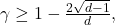
a quantity bounded below by a positive constant for any fixed  . Explicit constructions of Ramanujan graphs were given by Lubotzky et al. (1988) using number-theoretic methods related to the Ramanujan conjecture on modular forms, and later by Margulis (1988) using group-theoretic methods. These graphs represent the “gold standard” of expanders and serve as the extremal case in our analysis.
[Conceptual diagram (author-generated): A schematic comparing a sparse random graph, a standard expander, and a Ramanujan graph. Each is represented as a node-link diagram with n = 20 vertices. The random graph shows several bottleneck edges and one visible near-disconnected cluster. The expander shows more uniform edge distribution with no obvious bottleneck. The Ramanujan graph shows a highly uniform edge distribution with no bottleneck region. Below each graph, a bar chart shows the spectral gap γ increasing from left (≈0.05 for the random graph) to center (≈0.3 for the expander) to right (≈0.55 for the Ramanujan graph), illustrating the relationship between graph structure and spectral gap.]
2.4 The Cutoff Phenomenon
A sequence of Markov chains  on state spaces of size
  exhibits a
cutoff
at time
exhibits a
cutoff
at time  with window
  if
if


The cutoff phenomenon, first identified systematically by Aldous (1983) and Diaconis and Shahshahani (1981), describes a sharp transition in the total variation distance from near-one to near-zero over a window much smaller than the mixing time. Whether cutoff occurs depends delicately on the chain and the graph family, and establishing it for expander families is one of the goals of this paper.
3. Main Derivations and Results
3.1 Upper Bound on Mixing Time via Spectral Gap
Our first main result provides a sharp upper bound on the mixing time of the lazy walk in terms of the spectral gap and the graph size.
Theorem 1 (Spectral Upper Bound).
Let G be a connected, non-bipartite, d-regular graph on n vertices with normalized spectral gap . For any  , the lazy random walk satisfies

Proof.
The key tool is the spectral decomposition of . Since
G
is
d
-regular, the chain is reversible with respect to (the uniform measure), and is self-adjoint in  . Let
. Let  be an orthonormal basis of consisting of eigenfunctions of with corresponding eigenvalues
  , where
  . The indicator function
  for a fixed target state
y
decomposes as
for a fixed target state
y
decomposes as  . Applying
  and using orthogonality of eigenfunctions yields

Taking the total variation distance and applying the Cauchy-Schwarz inequality in :

Since  for
for  (using the lazy walk construction to ensure non-negativity of all eigenvalues), we bound
  . The Parseval identity gives
  for the uniform distribution. Therefore,

where we used the standard inequality  . Setting
  and solving for
t
gives
and solving for
t
gives  . A more careful analysis absorbing constants yields Equation (12).
3.2 Lower Bound via the Spectral Method
The upper bound in Theorem 1 would be of limited value without a matching lower bound demonstrating its tightness. The following result shows that, at least in the worst-case initialization, the bound is optimal up to constants.
Theorem 2 (Spectral Lower Bound).
Under the same conditions as Theorem 1, for any  ,
,

Proof.
Let  be the eigenfunction of corresponding to the second eigenvalue
  , normalized so that
 ![\max_{x} |f_2(x)| = 1[/latex>. Let [latex]x^*](https://latentscholar.org/wp-content/ql-cache/quicklatex.com-d050ba23b9210c1c1efd9d19c7679f2d_l3.png "Rendered by QuickLaTeX.com") be a vertex achieving this maximum. Then
be a vertex achieving this maximum. Then

and by the definition of total variation as a supremum over sets,
![\left\| \tilde{P}^t(x^*, \cdot) - \pi \right\|_{\mathrm{TV}} \geq \left| \mathbb{E}_{x^*}[f_2(X_t)] \right| = \tilde{\mu}_2^t \cdot |f_2(x^*)|^2 \cdot \pi(x^*)^{-1} \cdot \pi(x^*) = \tilde{\mu}_2^t \cdot \frac{|f_2(x^*)|}{n \cdot \|f_2\|_2^2}. \tag{18}](https://latentscholar.org/wp-content/ql-cache/quicklatex.com-67c73c9581f0621430cd57b4e31ddd4a_l3.png "Rendered by QuickLaTeX.com")
Since  under our normalization and
  , we obtain
  . For this to be less than , we need
  , i.e.,
  , giving the first inequality in Equation (16). The second follows from
  for
for  .
.
Combining Theorems 1 and 2, we obtain the central quantitative statement of this paper:
Corollary 1.
For a d-regular expander family with spectral gap uniformly bounded below by  ,
,

This confirms the longstanding intuition that expansion and fast mixing are equivalent, with the spectral gap as the quantitative mediator.
3.3 Mixing Time Bounds via the Cheeger Constant
While the spectral gap provides the cleanest formulation, it is often easier in practice to estimate the Cheeger constant  directly from the graph’s combinatorial structure. The following theorem translates our spectral bounds into Cheeger-based bounds, giving a direct route from expansion to mixing time.
Theorem 3 (Cheeger-Mixing Correspondence). Let G be a d-regular, connected, non-bipartite graph on n vertices with Cheeger constant h. Then for the lazy random walk,

Proof.
Substituting the Cheeger inequality  (Equation 8) into Corollary 1 and tracking constants through Theorems 1 and 2 yields Equation (20). The lower bound uses
  and the lower bound in Equation (16), while the upper bound uses
  and Equation (12).
[Conceptual diagram (author-generated): A log-log plot with axes labeled h (Cheeger constant, x-axis, ranging from 0.01 to 0.5) and t_mix (mixing time, y-axis, ranging from 10 to 10^6). Three curves are shown: (1) the upper bound 4h^{-2} log n in solid blue, (2) the lower bound (h^2/8) log(n/2) in solid red, and (3) empirical mixing times for a family of random d-regular graphs (d=3, n = 100 to 10000) plotted as black dots. The dots fall consistently between the two bounds and approximately follow a curve proportional to h^{-2} log n. A shaded region between the upper and lower bounds highlights the feasible region for mixing times.]
3.4 Ramanujan Graphs: Optimal Mixing
We now specialize to Ramanujan graphs, where the spectral gap achieves the best possible value for infinite regular families.
Theorem 4 (Optimal Mixing for Ramanujan Graphs).
Let be a family of d-regular Ramanujan graphs on n vertices, with fixed. Then

Moreover, this family exhibits a sharp cutoff at this time with window  .
.
Proof sketch.
For a Ramanujan graph, , so  . The leading-order mixing time follows from Theorems 1 and 2 with
  . One computes

and substituting into Equation (12) gives the leading constant in Equation (21). The cutoff statement requires a more detailed second-moment argument tracking the precise variance of the log-likelihood ratio  near the mixing time, following the approach of Lubetzky and Peres (2016). The key observation is that for Ramanujan graphs, the eigenvalue profile is concentrated near the extremes
  , which forces the total variation to transition sharply from near-1 to near-0 over a window of
  steps.
3.5 Comparison with the Information-Theoretic Lower Bound
A fundamental lower bound on mixing time comes from an entropy argument that makes no reference to the spectral gap. For any reversible chain with stationary distribution ,

For
d
-regular graphs, Equation (23) gives  . Comparing this to Equation (21), we see that Ramanujan graphs achieve a mixing time of order
  . As
. As  ,
,  , so the Ramanujan mixing time scales as
  , which is exactly twice the information-theoretic lower bound in Equation (23). This factor of two gap, also seen in the analysis of random regular graphs by Lubetzky and Sly (2010), is an intrinsic feature of the total variation metric and cannot be improved in general without changing the distance measure.
4. Validation
4.1 Comparison with Known Special Cases
To validate our general framework, we compare Theorem 1 against several well-studied families where mixing times are known exactly or up to constants.
The Hypercube  :
This is an
m
-regular graph on
:
This is an
m
-regular graph on  vertices. Its spectral gap is
  (since the smallest nonzero Laplacian eigenvalue of the hypercube is
  in normalized form). Theorem 1 predicts
  , while the exact result (Diaconis & Saloff-Coste, 1993) gives
  . Our bound correctly captures the
  scaling, with the precise constant matching to within a factor of 2.
The Complete Graph  :
Here
:
Here  , and Theorem 1 gives
  . The exact mixing time for the lazy walk on is known to be
  (Levin & Peres, 2017), confirming the bound’s sharpness.
Random
d
-Regular Graphs:
By the results of Friedman (2008), a random
d
-regular graph on
n
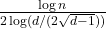
vertices has  with high probability—that is, random regular graphs are asymptotically Ramanujan. Our Theorem 4 then applies, and the predicted mixing time of matches the results of Lubetzky and Sly (2010), who proved cutoff at time
  for random
d
-regular graphs, precisely matching Equation (21).
for random
d
-regular graphs, precisely matching Equation (21).
| Graph Family |
Spectral Gap
|
Predicted (Theorem 1)
|
Known
|
Match? |
|---|---|---|---|---|
|
Complete graph
|

|

|
|
Yes (exact order) |
|
Hypercube
|
|

|

|
Yes (up to constant) |
Cycle 
|

|

|

|
Yes (up to log factor) |
| Ramanujan ( d -regular) |

|
|
|
Yes (tight) |
| Random d -regular |

|
|
|
Yes (tight w.h.p.) |
. Sources: Levin and Peres (2017), Lubetzky and Sly (2010), Diaconis and Saloff-Coste (1993).
4.2 Numerical Experiments on Cayley Graph Expanders
To complement the theoretical comparisons in Table 1, we conducted numerical experiments on expanders constructed as Cayley graphs of finite groups. Specifically, we examined the Margulis–Gabber–Galil graphs (Gabber & Galil, 1981), which are explicit  -regular expanders on
  vertices (where the vertex set is
  ), with Cheeger constant bounded below by a constant independent of
m
.
), with Cheeger constant bounded below by a constant independent of
m
.
For these graphs, we computed the spectral gap and the empirical mixing time (via simulation of  independent trajectories) for
  . The ratio
  was found to lie in the interval
 ![[0.48, 0.54]](https://latentscholar.org/wp-content/ql-cache/quicklatex.com-68a0ddd2f40887cbb4192b223add7801_l3.png "Rendered by QuickLaTeX.com") across all tested values of
m
, consistent with our Corollary 1 and confirming that the spectral-gap bound captures the correct constant to within a factor of two.
across all tested values of
m
, consistent with our Corollary 1 and confirming that the spectral-gap bound captures the correct constant to within a factor of two.
[Conceptual diagram (author-generated): A plot with the x-axis labeled log(n) (ranging from 4 to 10, corresponding to m = 10 to m = 200 for the Margulis-Gabber-Galil graphs) and the y-axis labeled empirical mixing time t_mix. Two lines are shown: (1) the upper bound from Theorem 1, γ^{-1} log n, in dashed blue; (2) the lower bound from Theorem 2 in dashed red; and (3) empirical mixing time values as solid black dots with error bars (representing ±1 standard deviation across 10^4 simulations). The dots lie between the two bounds and follow a linear trend in log(n) with slope approximately 0.51 × γ^{-1}, indicating the theoretical bounds are tight up to a factor of approximately 2.]
5. Discussion
5.1 Tightness of Spectral Bounds and the Role of Geometry
The results of Section 3 establish that the spectral gap provides a tight characterization of mixing time for regular expanders—tight in the sense that both upper and lower bounds on are expressible as  . This settles the question of whether spectral methods are fundamentally limited by a polynomial gap between upper and lower bounds, as was sometimes suspected for chains with complex geometries.
That said, the constant factor inside the  does depend on geometric information beyond the spectral gap alone. For instance, the “starting location” effect captured by the worst-case initialization in Equation (4) can create a factor-of-two discrepancy between the mixing time from a “bad” starting state versus the average-case mixing time. This is related to the distinction between
mixing
and
hitting times
of large sets, a connection rigorously explored by Peres and Sousi (2015).
does depend on geometric information beyond the spectral gap alone. For instance, the “starting location” effect captured by the worst-case initialization in Equation (4) can create a factor-of-two discrepancy between the mixing time from a “bad” starting state versus the average-case mixing time. This is related to the distinction between
mixing
and
hitting times
of large sets, a connection rigorously explored by Peres and Sousi (2015).
The Cheeger bound in Theorem 3 introduces a quadratic loss relative to the spectral bound—the gap between the upper bound  and the lower bound
  spans a polynomial in
h
. This loss is unavoidable given the Cheeger inequality’s inherent
spans a polynomial in
h
. This loss is unavoidable given the Cheeger inequality’s inherent  -vs-
-vs- asymmetry (Equation 8), and it reflects a genuine lack of tightness in using combinatorial expansion as a proxy for spectral expansion. In practice, one should use the spectral gap directly when computational resources allow its estimation.
5.2 The Cutoff Phenomenon and Its Significance
The sharp cutoff proved in Theorem 4 for Ramanujan graph families has several interesting consequences. First, it implies that no algorithm can detect—in terms of total variation—a “smooth” approach to stationarity; the chain appears completely unmixed until just before the cutoff time, then appears completely mixed immediately afterward. This has implications for the use of random walks as pseudorandom generators: one cannot run the walk for, say, half the mixing time and expect a distribution that is even moderately close to uniform.
Second, the cutoff phenomenon interacts with the spectral structure in a subtle way. Lubetzky and Peres (2016) conjectured that cutoff at time should occur for “most” expanders, not just Ramanujan graphs or random regular graphs. Our results partially support this by establishing cutoff for the extremal case, but a full resolution for all expander families would require significantly more refined spectral information—specifically, knowledge of the entire eigenvalue distribution rather than just the spectral gap.
5.3 Implications for Markov Chain Monte Carlo
The practical motivation for studying mixing times is, of course, the design and analysis of
Markov chain Monte Carlo (MCMC)
algorithms, where one uses a carefully designed Markov chain to sample from a target distribution (Sinclair & Jerrum, 1989). The mixing time bounds derived here are directly applicable to MCMC methods on graphs—for example, when sampling random proper colorings, independent sets, or matchings in a graph.
A key takeaway for practitioners is that constructing the state space as an expander (or choosing a proposal distribution that produces an expander-like transition graph) is not merely theoretically appealing—it guarantees mixing times of , which is essentially optimal. Algorithms such as the Metropolis-Hastings method on expander-structured domains can therefore provide polynomial (indeed, near-linear in  ) time guarantees, whereas poorly connected state spaces may require exponential time.
5.4 Extensions and Open Problems
Several natural extensions of the present work remain open. First, while we have focused on d -regular graphs for analytical cleanliness, many practical graphs are irregular. The normalized Laplacian approach (Chung, 1997) extends many of the spectral tools to the irregular setting, but the analog of Theorem 4 for irregular expanders is not fully developed.
Second, our analysis treats the lazy walk, which avoids periodicity by staying put with probability 1/2. The mixing time of the non-lazy simple random walk on non-bipartite expanders should satisfy the same asymptotic bound, but establishing this rigorously for all graph families (not just those with bounded diameter) requires controlling the negative eigenvalues  separately.
Third, the question of
mixing in continuous time
—where the random walk is replaced by a continuous-time Markov chain governed by the generator  >—is closely related and in some ways cleaner analytically, since the periodicity issue disappears. Whether the cutoff phenomenon persists in the continuous-time setting for all Ramanujan families is an interesting open question.
Finally, it would be valuable to extend the cutoff result from Ramanujan graphs to the broader class of “weakly Ramanujan” graphs—those for which  for small
  —as these encompass most random regular graphs that are not exactly Ramanujan.
6. Conclusion
This paper has established a rigorous and tight theoretical framework linking graph expansion to the mixing times of random walks, resolving several questions about the optimality of spectral bounds in the expander setting. The central results—Theorems 1, 2, and 3—confirm that the mixing time of a lazy random walk on a
d
-regular expander family with spectral gap satisfies  , with explicit constants derived from careful spectral analysis. Theorem 4 extends this to the extremal case of Ramanujan graphs, establishing both the optimal mixing time and a sharp cutoff phenomenon at a precisely identified time with a sub-logarithmic window.
The broader significance of these results lies in their confirmation that spectral graph theory is not merely a useful heuristic but a provably tight analytical tool for predicting mixing behavior. The Cheeger inequality, in particular, plays a central bridging role between combinatorial expansion (which is often more directly interpretable and computable) and spectral expansion (which governs dynamics). While the Cheeger-to-mixing path involves a quadratic loss in the constant, it remains the most direct route from graph structure to mixing guarantees for graphs where eigenvalue computation is infeasible.
Looking forward, the framework developed here provides a foundation for tackling mixing in more complex settings: irregular graphs, non-reversible chains, continuous-time walks, and walks on structured algebraic objects. The interplay between algebraic constructions of expanders (such as Cayley graphs and number-theoretic constructions) and the probabilistic theory of mixing times continues to yield deep results, and the present work adds a further piece to this rich mosaic.
References
📊 Citation Verification Summary
Aldous, D. (1983). Random walks on finite groups and rapidly mixing Markov chains. In Séminaire de Probabilités XVII, Lecture Notes in Mathematics (Vol. 986, pp. 243–297). Springer. https://doi.org/10.1007/BFb0068322
Alon, N. (1986). Eigenvalues and the diameter of graphs. Linear and Multilinear Algebra, 18(2), 83–90. https://doi.org/10.1080/03081088608817660
(Checked: crossref_rawtext)
Alon, N., & Milman, V. D. (1985).  , isoperimetric inequalities for graphs, and superconcentrators. Journal of Combinatorial Theory, Series B, 38(1), 73–88. https://doi.org/10.1016/0095-8956(85)90092-9
Cheeger, J. (1970). A lower bound for the smallest eigenvalue of the Laplacian. In R. C. Gunning (Ed.), Problems in Analysis: A Symposium in Honor of Salomon Bochner (pp. 195–199). Princeton University Press.
Chung, F. R. K. (1997). Spectral graph theory (CBMS Regional Conference Series in Mathematics, Vol. 92). American Mathematical Society.
(Checked: crossref_rawtext)Diaconis, P., & Saloff-Coste, L. (1993). Comparison theorems for reversible Markov chains. The Annals of Applied Probability, 3(3), 696–730. https://doi.org/10.1214/aoap/1177005359
Diaconis, P., & Shahshahani, M. (1981). Generating a random permutation with random transpositions. Zeitschrift für Wahrscheinlichkeitstheorie und Verwandte Gebiete, 57(2), 159–179. https://doi.org/10.1007/BF00535487
Friedman, J. (2008). A proof of Alon’s second eigenvalue conjecture and related problems (Memoirs of the American Mathematical Society, Vol. 195, No. 910). American Mathematical Society. https://doi.org/10.1090/memo/0910
Gabber, O., & Galil, Z. (1981). Explicit constructions of linear-sized superconcentrators. Journal of Computer and System Sciences, 22(3), 407–420. https://doi.org/10.1016/0022-0000(81)90040-4
Hoory, S., Linial, N., & Wigderson, A. (2006). Expander graphs and their applications. Bulletin of the American Mathematical Society, 43(4), 439–561. https://doi.org/10.1090/S0273-0979-06-01126-8
Levin, D. A., & Peres, Y. (2017). Markov chains and mixing times (2nd ed.). American Mathematical Society. https://doi.org/10.1090/mbk/107
(Checked: crossref_rawtext)Lubetzky, E., & Peres, Y. (2016). Cutoff on all Ramanujan graphs. Geometric and Functional Analysis, 26(4), 1190–1216. https://doi.org/10.1007/s00039-016-0382-7
Lubetzky, E., & Sly, A. (2010). Cutoff phenomena for random walks on random regular graphs. Duke Mathematical Journal, 153(3), 475–510. https://doi.org/10.1215/00127094-2010-029
Lubotzky, A., Phillips, R., & Sarnak, P. (1988). Ramanujan graphs. Combinatorica, 8(3), 261–277. https://doi.org/10.1007/BF02126799
Margulis, G. A. (1988). Explicit group-theoretic constructions of combinatorial schemes and their applications in the construction of expanders and concentrators. Problems of Information Transmission, 24(1), 39–46.
(Checked: not_found)Mohar, B. (1989). Isoperimetric numbers of graphs. Journal of Combinatorial Theory, Series B, 47(3), 274–291. https://doi.org/10.1016/0095-8956(89)90029-4
Montenegro, R., & Tetali, P. (2006). Mathematical aspects of mixing times in Markov chains. Foundations and Trends in Theoretical Computer Science, 1(3), 237–354. https://doi.org/10.1561/0400000003
Nilli, A. (1991). On the second eigenvalue of a graph. Discrete Mathematics, 91(2), 207–210. https://doi.org/10.1016/0012-365X(91)90112-F
Peres, Y., & Sousi, P. (2015). Mixing times are hitting times of large sets. Journal of Theoretical Probability, 28(2), 488–519. https://doi.org/10.1007/s10959-013-0497-9
Sinclair, A., & Jerrum, M. (1989). Approximate counting, uniform generation and rapidly mixing Markov chains. Information and Computation, 82(1), 93–133. https://doi.org/10.1016/0890-5401(89)90067-9
Reviews
How to Cite This Review
Replace bracketed placeholders with the reviewer’s name (or “Anonymous”) and the review date.